Moving Preparation Guide for People Relocating to Grand Junction
 Moving Preparation Guide for People Relocating to Grand Junction
Getting started with your Moving Preparation in order to relocate to Grand Junction can be daunting, we get it. Paul has been a REALTOR® since 2001 and I worked with him at our Minnesota Brokerage for twenty years, so we understand the process of moving from a buyer and seller’s perspective. If you are considering moving to Grand Junction, we know that simply the thought of moving might make you hesitate. We moved from our home of 26 years. We know how “things” can accumulate.
To make it easier for you, I wanted to provide some of the Moving Preparation we went through that you may find useful. There is no right or wrong way to do this. Our preparation took over two years, shifting our focus along the way. We took breaks and we asked for help when we needed it. Moving is a big deal, we know.
Decluttering your home
The first step we took was to simply start decluttering our home. We were extremely motivated after watching the 2020 documentary called The Minimalists: Less is Now. Here’s a 2-minute trailer for the documentary on Netflix. That really got us motivated to pass on to others what we weren’t finding value in anymore. We were ready to be less attached to things and spend more time on activities and traveling to new places.
Starting with just one room, our owner’s suite bathroom, we removed everything, did a deep clean, painted, and then put back only what we were currently using. Everything else got donated or sold. After completing that one small space, it gave us encouragement to repeat the process in each room. This process can be started immediately and will last until the day you pack the last box.

In the kitchen, we got rid of expired food and spices, storage containers missing the lids, pots and pans we didn’t really need but thought we did. We donated small appliances and serving pieces we only used on a rare occasion.
If there was a small item I was hesitating on keeping because I wasn’t sure if I’d need it, I learned to ask myself “Can I buy it again within 20 minutes for under $20?” If the answer was yes, then it got donated. Knowing that if I miss it in the future, I could always buy it again. Since moving to Grand Junction, we’ve only purchased one or two things of the thousands of items we donated.
If it wasn’t hanging on the wall now, or on display somehow, then do I really want it? We had artwork and wall art stored in our basement. What good does it do in a box? During this process I pulled out some heirloom items to display them vs having them packed away. Now I get more enjoyment from having them.
Deferred Maintenance
There were things in our home that were ok for us, but if we wanted to sell our home for top dollar, we needed to do some additional maintenance to make it really shine. Starting with the exterior, we painted the trim, releveled the concrete sidewalk that had sunk over the years, and painted our steel garage doors. In addition, I thinned our landscaping, added more mulch and moved some plants around to fill the space. I took seasonal photos too, especially in the spring and summer in case we ended up moving in the ugly winter season.
Inside we did things like sanding down our wood windows and sealed them where they were showing wear and tear. In our basement we painted it a light, neutral color and replaced the carpeting. We scrubbed our kitchen and bathroom cabinetry inside and out and used a special oil to brighten up all of the natural woodwork.
Painting
First, we started by removing personal photos from shelves and walls to help buyers envision themselves living in the house instead of seeing our family there. Holes in the walls were patched and rooms received a fresh coat of paint. In all the bedrooms, walls were updated to a warm beige, which feels welcoming—never go completely white, as it can feel too sterile. Even the laundry/mud room and the metal door from the garage benefited from a new coat of paint.
If there’s a dark accent wall you love, remember that a buyer may perceive it differently. Neutralizing bold colors is usually worth the effort, since a dark wall can feel like “one more thing we need to do before moving in”—something you want to avoid for a smooth sale.
Determining What to Keep
 This whole process is emotional. We started with the easy decisions first. Things we didn’t use anymore or were outdated. Things we knew for sure we didn’t want or need anymore. After all, we were moving from a 2600 SF home with a full basement and three-car garage to a home of half the size. Knowing we would be downsizing, we actually looked forward to getting rid of stuff. It was very gratifying to see an empty surface or sparsely filled cabinet.
When I came across an item that we had more attachment to, like family photo albums, I waited to make a decision on those. I wanted to do all the easy stuff first, then come back to the more difficult, time-consuming things.
Clothing was pretty simple. If I hadn’t worn something during that season, and it wasn’t for special occasions, I donated it. I eliminated items that had limitations, like items I would only wear around the house. I kept one pair of black heels and black sandals and will only buy dresses that go with black footwear in the future. Working from home made that an easy decision.
There were way too many towels, and we do laundry each week, so why do I need more than a week’s worth of any one type of clothing? 10 pairs of black socks, nope, 2-3 will do. You get the idea. I kept a variety but not a large quantity of any one thing.
Difficult Decisions
Historical items were tough for me. My mom didn’t keep much from my childhood and I wanted my teenage kids to determine what they wanted to keep from theirs. We got some large rubber totes with their names on them and started to pack their childhood memories. Things they wanted to keep but didn’t have room for while away at college. Paul and I have a box marked heirloom items where we have special things we will keep forever.
Letting Go of Photo Albums and Yearbooks
What was difficult were all the photo albums and high school yearbooks. There were over 15 albums, mostly from our teenage years and early marriage. Eventually we stopped printing photos taken from our camera and saved photos digitally because we were taking them on our phones vs with a camera. We decided to go through each album and relive those memories. I took digital pictures of some and shared with family and friends. I have the memories, and saved some photos from the event, just not ALL the photos, and I am ok with that.
You can buy a digital photo frame too where you add the app to your phone and upload photos to a digital frame that you keep in your living room or wherever you spend a lot of time. I see them as a collection on my phone too each time I go to open the app. It makes me smile. I helped my mom take pictures of very old photographs of her family so she could add them to her digital frame. It allows you to enjoy them now vs letting them sit in a box.
Documents and Business Records
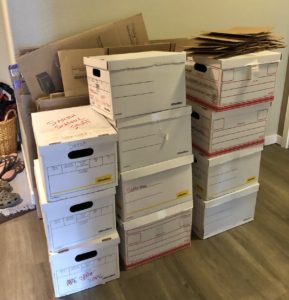
Because we owned two businesses, we had to keep our records and IRS/State Tax Returns for a certain number of years. I used to keep more than we needed because I had the space. We started to shred the old files and burned some too. I put a “destroy date” on the boxes and I just shredded a box with a 2024 date on it, and it felt so good to get rid of it!
I scanned or took a picture of all of our important business and personal documents so I could get access to them easily in our new state. Marriage license, business formation documents, wills and estate documents, etc. Making as much digital as we could took time, but was well worth it for easy access. Digital files take up way less space too!
Fill Those Trash Bins
Every week for a year we hauled our 30-gallon garbage bin down to the curb, and made sure it was FULL. In the beginning it was easy. We threw out old rugs that were fine for the unfinished part of our basement but we knew we wouldn’t need them in the future. If the bin wasn’t full by the night before, we walked through the house to see if there was anything else we could add.
Donating Items to Charity
This was easy. I did NOT want to have a garage sale. The pain of setting it all up, and running it, to only make a few hundred dollars wasn’t a good use of my time. We focused on donating as much as possible and lumped our donations into every other tax year so we could itemize our deductions. Every charity that called asking for item donations, I said yes to. My goal was to give them 2 trash bags full of donations. I did this every few months with multiple charities like the Disabled Veterans and the Epilepsy Foundation. They came to the house to pick it up, so it was easy.
I made regular trips to other local charities with small furniture, clothing, yard maintenance items, and household items. It was easier than we thought to sell larger items like beds, couches and our dining room table using Facebook Marketplace. Luckily we sold our lawn mower and heavy duty snowblower to our neighbors! We kept what was easy to move or our favorites.

U-Haul trailer and our Rav4 driving to Colorado
Moving Across the Mountains
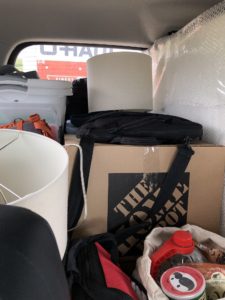
Everything we owned got packed into one 20’ moving truck Paul drove, and one small U-Haul we towed with our Rav4 over the mountains. Ask Paul about that uphill climb out of Denver on I-70! LOL. He wrote a post about what it’s really like to drive I-70, that post is worth a read, it will make you laugh and make you aware that it’s not your typical interstate highway.
Decision Fatigue
My final moving preparation tip is to realize that decision fatigue is real. There were days I just couldn’t make any more decisions about our “stuff”. I set some things aside I just didn’t know what to do with, keep or not keep? Some things needed more research. For example, I donated the formal dresses from the school dances my girls attended to a specific charity just for that purpose vs Goodwill. Did you know Goodwill takes bowling balls? At least the one by us did, but call first to verify. Our local bowling alley didn’t want them.
Letting Go of Gifts and Cherished Items
Gifts from other people that I didn’t find value in anymore created a strange feeling because I appreciated the gift when I got it. And I probably used it, but just didn’t want it anymore. It was a bit more difficult donating a crystal vase that was a wedding gift. There was some guilt to process, but I tried to relive the moments and the people during this purging process. I took photos of items and texted a few to my college friends and we laughed. I wanted to embrace this process as much as possible, even knowing there would be difficult moments and tough decisions along the way.
When our house started to look sparse, I actually found it a relief. We sometimes wonder what was in all those boxes stored in the basement. It seemed we kept stuff because we could, just in case we needed it. But what we found out was we really didn’t need those things anymore at all. I was happy that others could find joy in the items that were being donated and sold.
Preparing a Home to Sell
 Paul always tells his clients that “The way you sell a home is different than the way you live in a home.” That means decluttering and depersonalizing it as much as possible before it goes on the market. Pre-packing items that are used on rare occasions or in a different season than the one you are currently in can really help open up your cabinets and closets. You want buyers to be able to easily walk up to a window and move from room to room. Too much furniture makes a room look small. Most times less is best.
👉 You may want to read Paul’s post about essential steps for moving.
You Only Have One Chance to Make a First Impression
You want your home to look it’s best when the photographer comes to take photos. Make sure your horizontal surfaces are free from clutter. Put things away in drawers, closets or cabinets. Make sure your closets don’t look over-stuffed.
Make sure your home shines and there aren’t loose hinges, burnt out lightbulbs, discoloration or stains. When in doubt, replace it, paint it or get rid of it. You want buyers to see the potential of living there, not a potential list of repairs, replacements and concerns. Ask Paul about the value of getting your home pre-inspected. We did and we found some items that we could easily fix that we weren’t aware of ourselves. When we sold our home (after the first showing) the buyers didn’t ask us to do anything more to the home after their inspection. They could tell we had taken good care of it.
If you want a smooth selling experience before you move to Grand Junction, or anywhere, do as much work ahead of time as you can. It will pay off in a much smoother transaction and save you time and frustration during the home selling process. You may want to read Paul’s post about writing Contingent Offers. Ask him about Radon too!

Moving to Colorado with our 20′ U-Haul truck!
If you need help interviewing and hiring a professional real estate agent where you live, he can help you with that too. You want an agent who understands how preplanning, and preparation can help reduce the stress and anxiety around moving.
If you are considering moving to the Grand Valley, call or text Paul (612) 306-9558. He’d be happy to give you a tour of the area if you haven’t been here before. We have lots of posts about what to do, things to see, and places to eat in this fantastic geographic location.
Learn more about Paul Aspelin and read the numerous recommendations and testimonials he’s earned over his career.
Guest Post from Michelle Aspelin
Grand Junction, Colorado resident since 2023.
Move to Grand Junction, we’ve been waiting for you!
© 2025 Paul Aspelin, REALTOR® and Michelle Aspelin. MovetoGrandJunction.com Copyright protected. All rights reserved.