Tag Archive for: Paul Aspelin REALTOR®

Hiking Monument Canyon Trail Review: What to Expect

Guest post by Michelle Aspelin

What it’s Really Like Hiking Monument Canyon Trail

If you’re planning on hiking Monument Canyon Trail in the Colorado National Monument, you’ve probably heard it’s “moderate” and takes 2–3 hours. Spoiler alert: it might take longer, it did for us.

I attempted hiking Monument Canyon Trail with Wedding Canyon twice before finishing it, and even seasoned hikers feel the challenge. Here’s our honest experience, so you can plan accordingly.

When we first moved to Grand Junction, Paul completed this hike and found it to be much more of a challenge than he expected. He couldn’t believe he finished it.

I want to prepare you because locals will encourage you to hike this popular trail when you first move to Grand Junction. I want to give you our impression so you can decide for yourself when you are ready to hike it.

Quick Stats: Monument Canyon Trail

  • Distance: 5 miles
  • Elevation Gain: 770’ (that’s like 77 flights of stairs)
  • Difficulty: Moderate to challenging
  • Time: 2-3 hours (or 5 hours!)

Is Monument Canyon Trail really “moderate”? Our experience says otherwise.

Our Monument Canyon Trail Experience

Here’s the link to Paul’s quick Hiking Monument Canyon Trail Video on his Move to Grand Junction YouTube Channel – be sure to watch and give it a “like”.
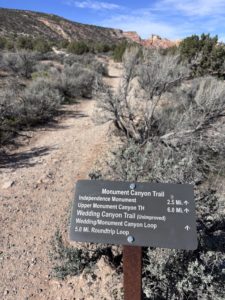
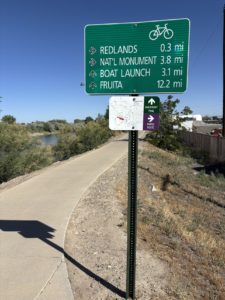
trailhead sign with miles for the hiking route options

Hiking at higher elevation makes even a “moderate” trail more challenging. We stopped often to catch our breath, despite living at 4,583’ of elevation in Grand Junction. Adding time for lunch, snacks, and scenic stops, the 5-mile hike took us 5 hours.

We quickly learned that “moderate” doesn’t always match expectations, it depends on elevation, terrain, and pacing. We purposely hiked at a slower pace, we had to stop to breathe, but the 770’ elevation gain during the hike does have an impact, even though we are acclimated to the elevation. It’s like climbing 77 flights of stairs.

Hiking Monument Canyon Trail: Trailhead Route and Tips
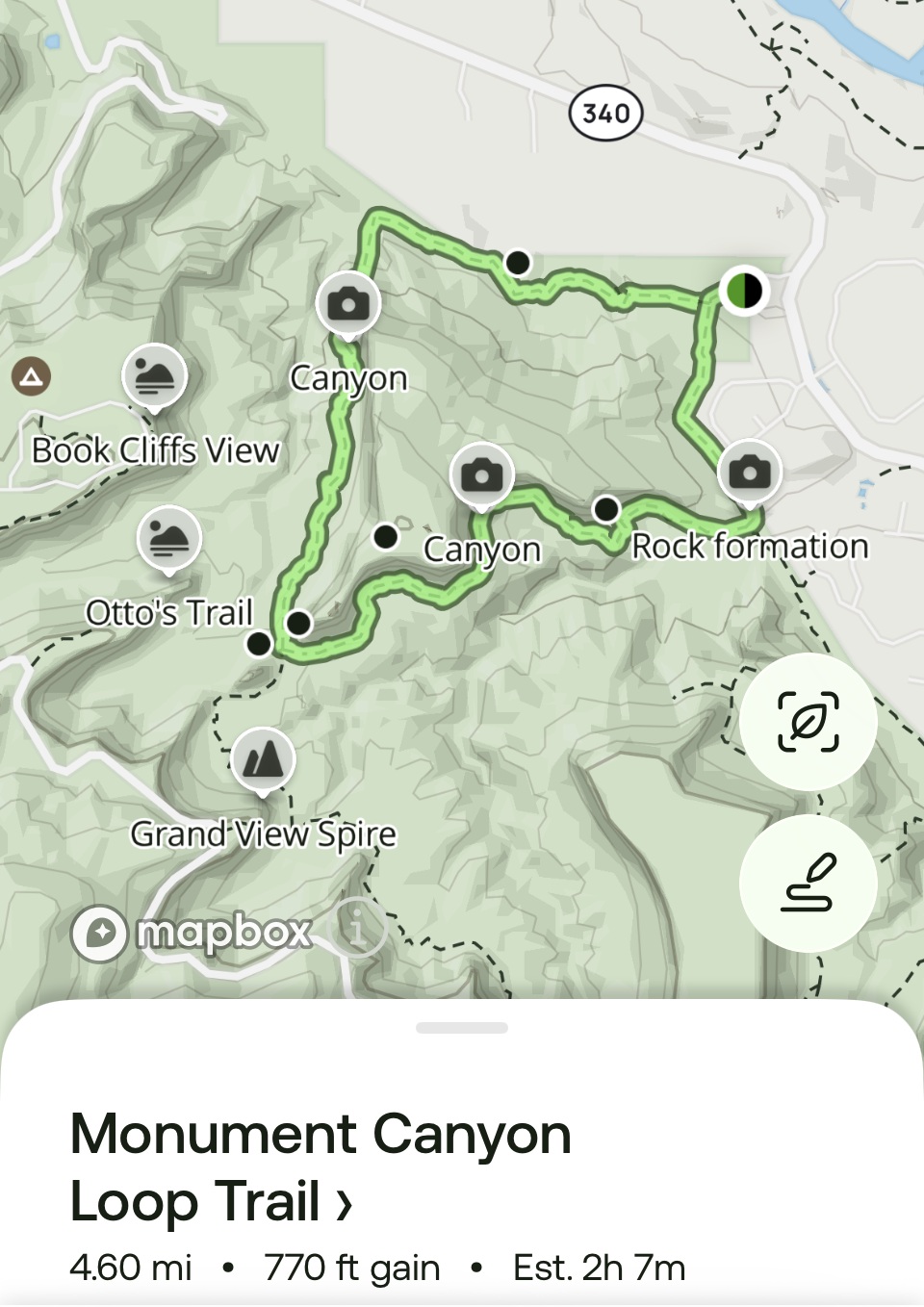
hiking Monument Canyon Trail map from All Trails appThe AllTrails app says that hiking Monument Canyon Trail loop with Wedding Canyon should take 2 hours and 7 minutes and is moderate. We knew it would take us longer, but not 5 hours! After all, we aren’t 25 anymore. We were just surprised. Were we really THAT slow or was it just more challenging?

On this map, Wedding Canyon is at the top, trailhead on the right, Monument Canyon is on the bottom, Independence Monument on the left.

Our 2026 experience was mixed initially. After the hike we were exhausted and I wasn’t sure I wanted to write about it and promote this hike. But after we recovered, and I reflected on what we saw, and more importantly, experienced, I thought it would be good to warn you, I mean, share it with you.

Trailhead: Take Broadway/Hwy 340 to the Lower Monument Canyon Trailhead. There’s a small parking lot with two portable toilets.

The Trail Itself
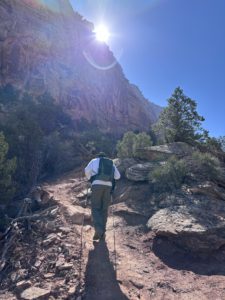
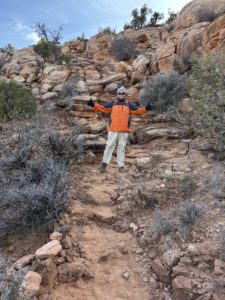
Paul hiking Wedding Canyon

Paul hiking the Wedding Canyon Trail

After our first two attempts at starting on the Lower Monument Canyon Trail, we were advised to start on the Wedding Canyon Trail and I think that’s what made the difference in our ability to complete the 5-mile hike.

Starting the hike with Monument Canyon Trail is a slow uphill climb almost the entire time, with lots of steps. From the loop trailhead it’s 2.5 miles to reach Independence Monument, considered the half-way point of this loop hike.

Wedding Canyon Trail starts out with a steep descent with switchbacks over loose gravel, a walk across flat open land, then the ascent to Independence Monument. It was much easier to descend through Monument Canyon than to start on that trail, in our opinion.

We discovered after we reached Independence Monument that the Wedding Canyon Trail is “unimproved”. Ah, ok, that makes sense. That’s why there were steep climbs, no steps, loose gravel, rocky terrain, and several spots that were washed out.

In one section, run-off washed away the “shelf” part of the trail so much so that the edge to step across the wash was about as wide as your shoe. We went slow and sort of hopped over the gap in the trail. Luckily, we had our hiking poles to balance us on the ascent. We both slipped a couple of times but didn’t fall. The trail is both narrow and wide. We were walking along a huge sandstone cliff which offered some shade.

We started at 10:30am so the sun was behind the cliff part of the time. That helped keep us cool. It was about 55 degrees, but the sun made it feel like it was in the 70s. We hiked in mid-March. Be careful when you decide to hike, mornings are always better than mid-afternoons due to the heat and sun.

Independence Monument: The Highlight
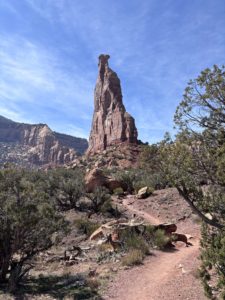
Independence Monument baseOnce we reached the base of Independence Monument we stopped to eat our lunch. It was much-needed break. We discovered a huge rock with words etched into the top, likely the Declaration of Independence or they could be about John Otto and the significance of this monument in the park. The words were difficult to read after years of exposure to the elements. Let us know what you think they say if you do this hike.

Independence Monument was formed after water and ice eroded walls that once connected the pinnacle to mesas on each side. Sandstone was deposited in this area 210 million years ago and forms the cliffs we see today. Quite amazing. There are so many colorful layers.

The Tradition of Climbing Independence Monument

One of the highlights of hiking Monument Canyon Trail is reaching Independence Monument, a 450-foot sandstone monolith. Every year on the 4th of July, a crew climbs the monument to hoist an American flag, celebrating our nation’s independence. The flag flies for about a week.

John Otto was the first to climb Independence Monument in June and July in 1910, honoring Flag Day and Independence Day. He also built many of the trails in the Monument and became the first official custodian after the Monument was established in 1911, earning a salary of just $1 a month, according to my book Scenic Driving Colorado by Stewart M. Green.

Standing at the base of Independence Monument, knowing its history, makes the hike feel both physically rewarding and historically significant. I’m glad we went.

Hiking Monument Canyon Trail: Returning via Lower Monument Canyon

After reaching Independence Monument, we turned left onto Lower Monument Canyon Trail to head back, which was mostly downhill. (If you turn right, you’ll be on Upper Monument Canyon Trail, which climbs up to Rim Rock Drive.) The full Monument Canyon Trail from bottom to top is about 6 miles with an elevation gain of 1,843 feet, rated “moderate and steep.” We were only on the lower part of the trail.

With the sun at our backs, the return hike was more comfortable. We stopped frequently to take photos of Independence Monument again. We were grateful we weren’t climbing the steps this time. The trail hugs the cliff wall in a few spots but is wide enough elsewhere for other hikers to pass us safely.

The last half mile felt exhausting. When we finally reached the parking lot, we joined hands and raised our arms like we were finishing a marathon. We were completely spent but thrilled to have completed our longest hike to date.

Afterward, we drove home, collapsed on the couch, and groaned every time we moved. My hips, middle back, ankles, and even toes were sore. But two days later, we went on another hike.

Gear & Preparation Checklist

  • Water (more than you think)
  • Snacks/lunch
  • Sturdy hiking shoes or boots
  • Sun protection
  • A hat and sunglasses
  • Trekking poles (recommended but not required)
  • Layered clothing if starting out early when it’s still cool
  • For fast-acting hydration we take electrolyte fast chews by Salt Stick
  • Hydration powder with electrolytes in your water helps too
  • For a burst of energy, we like Skratch Labs brand of energy chews (sport fuel)

You can get these items at REI in Grand Junction including a small waist pack, backpack or hydration vest with pockets to carry everything you need to be prepared for hiking in the high desert. Read our post about Water Bottles in Grand Junction: Why it Matters Here.

You can read our How to Avoid Altitude Sickness in Grand Junction guide for more hydration tips.

Wildlife + Wow Factor
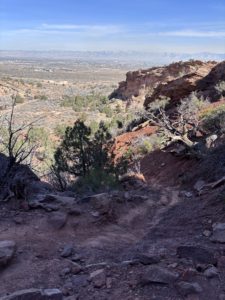
Wedding Canyon Trail and view towards Fruita

Wedding Canyon Trail and view towards Fruita

If you want to see bighorn sheep, look for them in Monument Canyon about midway between Independence Monument and where the trail leaves the neighborhood fence line. We did see two in Wedding Canyon on our hike, but people see them regularly in the Monument Canyon, especially early or later in the day, not so much midday.

Seeing the canyons themselves is amazing. The pretty little flowers, the diverse landscape, the huge walls of different rock layers are all stunning.

To be at the base of Independence Monument was very satisfying and, to be honest, felt a bit patriotic. I was glad we did the hike. I am thankful to be able to say, “I’ve been there” and experienced this special place in the Colorado National Monument. Will I hike the loop again? Probably, but not anytime soon. I need the trauma of the experience to wear off first.

Hiking Mary’s Loop to Pizza Point: A Scenic McInnis Canyons Hike
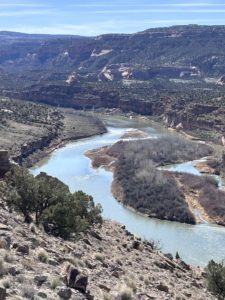
Pizza Point Colorado River Overlook

Pizza Point Colorado River Overlook

Two days after our Monument Canyon/Wedding Canyon loop hike, we tackled a 4-mile hike in the McInnis Canyons National Conservation Area with only 568 feet of elevation gain, and it felt much easier and enjoyable.

We took Mary’s Loop to Pizza Point. We returned via Steve’s Loop, which offers breathtaking views of a steep canyon and we saw grazing cows, and an interesting slot canyon to explore. This is in the Horsethief Canyon area between Mack and Loma.

Pizza Point is an incredible overlook of the Colorado River and was our halfway point. We spotted boaters and kayakers below and enjoyed a quick snack while taking in the scenery. The full 4-mile hike took us just about 2 hours, including the stop at the river overlook. Much faster than the Monument Trail loop hike!

This trail is shared with mountain bikers, hikers, and trail runners, so be aware of bikers coming up behind you. Across the river, we could see the dramatic Rattlesnake Canyon, a truly stunning view. We have hiked to Rattlesnake Arches, very cool.

For reference, here’s the official BLM map of McInnis Canyon National Conservation Area if you want to hike in this beautiful area.

What This Hike Taught Us About Living in Grand Junction

The outdoor lifestyle is real here. While this particular hike was challenge for us, there are many more trails we’ve hiked before this that we really enjoyed. Anything 4 miles and under is likely going to be enjoyable to us, longer than that starts to be “not so fun” anymore.

We learned what “moderate” mixed with 770’ elevation gain really means. Know we know what an unimproved trail looks like and feels like. We were glad to have our trekking poles.

You build up to this type of hike.

I felt good knowing we CAN do this sort of hike, given enough time. We planned it on a day when we wouldn’t feel rushed. We did try to enjoy it along the way. Sometimes you look down at the trail itself too much (so you don’t trip on a rock) that you forget to look up and enjoy the scenery and stop to hear the sounds of nature.

I guess we did more stopping and looking than we realized. Reflecting back, I enjoyed it. I am glad we did it mid-March. If it was hot out, it would have made it even more difficult.

If you’re planning on hiking Monument Canyon Trail after moving to Grand Junction, knowing what to expect can make all the difference.

You might also enjoy these posts…

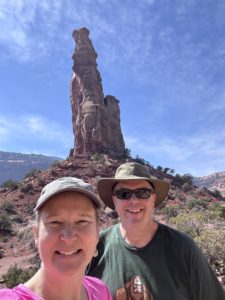
Michelle and Paul Aspelin at the base of Independence Monument

at the base of Independence Monument

If you’re thinking about moving to Grand Junction and want honest insight into what daily life is really like here, we share that on this site and we’re always happy to help answer questions.

Contact Paul for a tour of Fruita, Grand Junction or Palisade, or sign up for his real estate market updates if you want to learn more about properties in Mesa County.

Guest post by Michelle Aspelin
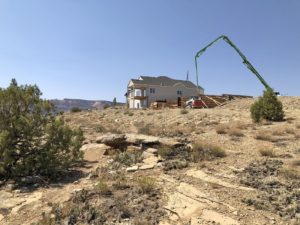
 

What Surprises Most Buyers When Relocating to Grand Junction, Colorado

(And Honestly… I Did Too)

Grand Junction relocation buyers moving to Colorado’s Western Slope tell me the same thing almost every time:

“This feels different than what we’re used to.”

They’re right.

After decades of working in a highly regulated metro real estate market before relocating to Western Colorado myself, I’ve experienced both ends of the spectrum. Rigid systems with standardized rules… and more flexible markets like Mesa County, where buyers are expected to ask better questions.

The buying process here isn’t broken.
It’s simply different.

And for Grand Junction relocation buyers coming from states where disclosures are detailed, permits are expected, inspections are standardized, and procedures are predictable, those differences can feel surprising—or even unsettling—if no one explains them before an offer is written.

That’s where experience in multiple markets becomes a real advantage.

Below are the eight most common things relocation buyers tell me shocked them once they started buying on the Western Slope. None are deal-breakers—but every one of them matters.

What surprises Grand Junction relocation buyers most?

Relocation buyers are often surprised by non-mandatory seller disclosures, “as-is” contracts, limited permit requirements, unregulated septic systems, inspection practices that vary widely, misleading days-on-market data, and resale homes that appear poorly prepared for the market.

👉 Learn about my Grand Junction Relocation Guide

Why Seller Disclosures Surprise Grand Junction Relocation Buyers

One of the first things that catches relocation buyers off guard is how seller property disclosures work in Colorado.

In many states, disclosures are mandatory and provided upfront.
In Colorado, sellers are not required to complete a Seller’s Property Disclosure unless a buyer specifically requests one and negotiates it into their offer.

While sellers must disclose adverse material facts actually known, the disclosure form itself is not question-based like it is in more regulated states.

Instead of detailed prompts such as:

  • “Have you ever had water intrusion?”
  • “Has this system failed or required repair?”
  • “Are you aware of X, Y, or Z?”

Colorado real estate disclosures function more like a checklist—leaving sellers to decide whether checking a box is enough, or whether explanation is needed.

What feels most backward to many buyers is when disclosures are delivered. In many cases, buyers submit an offer first and only receive disclosures afterwards, sometimes learning about long-standing issues they would have wanted to know upfront.

The best agents in the Grand Valley understand this concern and encourage sellers to complete disclosures before listing and upload them to the MLS. That transparency prevents deals from unraveling later.

I’ve also seen disclosures returned completely blank, but signed.
Yes, that technically satisfies the requirement.
Practically? It creates immediate doubt.

👉 Learn more about buying a home in Grand Junction

Why Every Home Sale Is “As-Is” in Colorado

One of the biggest surprises for relocation buyers is learning that every home sale in Colorado is considered “as-is.”

This isn’t an optional clause, it’s boilerplate language in every state-approved contract:

“Seller is conveying the Property in an ‘As Is,’ ‘Where Is,’ and ‘With All Faults’ condition.”

Buyers can and absolutely should inspect the home.
But sellers are not obligated to make repairs simply because issues are discovered.

Negotiations can happen—but they are exactly that: negotiations, not guarantees.

For buyers coming from states where repairs are routinely expected, this feels jarring. “As-is” does not protect sellers who fail to disclose known material defects, but it does place more responsibility on buyers to inspect thoroughly and negotiate strategically.

My takeaway after decades in both systems?
Buyer beware—but buyer prepared wins.

Building Permits Aren’t Always Required Outside City Limits

Relocation buyers are often shocked to learn that homes built outside city limits may not have required building permits at all.

That doesn’t automatically mean poor construction—but it does mean buyers need to dig deeper:

  • Who built the home
  • When it was built
  • Whether inspections were ever performed

For buyers accustomed to uniform oversight, this lack of regulation can feel unsettling unless it’s explained upfront.

If you’d never consider buying a home without permit oversight, wouldn’t you want to know before touring properties outside city limits?

Exactly.

Septic Systems in Mesa County Are Largely Unregulated

This one surprises almost everyone—myself included.

In the Grand Valley, septic systems are not centrally regulated, tracked, or logged. There’s no statewide database, inspection history, or maintenance record system.

For relocation buyers coming from states with strict septic oversight, this can feel risky. It also makes proper inspections and trusted contractors absolutely critical.

Having spent decades working in a highly regulated septic environment, I help buyers separate:

  • Legitimate red flags
  • From “that’s just how it’s done here” explanations

The Real Cost of New Construction Lots

New Construction Buyer Representation

Relocation buyers shopping for new construction homes are often surprised to learn that the advertised lot price is not always the real cost to build.

Certain areas of Mesa County have swelling or shifting soil that may require:

  • Foundation piers or pilings
  • Additional engineering
  • Specialized foundations

Those requirements can easily add tens of thousands of dollars before framing begins.

Many builders require buyers to pay for soil testing after a lot is under contract. While contingencies help, they still cost time, money, and emotional energy.

Pro tip: Knowing which areas are prone to issues before shopping saves weeks of frustration and thousands of dollars.

Helpful guide to understanding swelling soils in Colorado: https://coloradogeologicalsurvey.org/publications/swelling-soils-guide-colorado-homebuyers-homeowners/

Let me know if you’d like to borrow my copy.

👉 Read my post about cost of living in Grand Junction insights

Why Existing Homes Often Feel “Not Market Ready” to Out-of-State Buyers

Relocation buyers notice this immediately.

In many metro markets, professional resale staging is standard.
In the Grand Valley, it’s often misunderstood—or skipped entirely.

Rearranging furniture is not staging.

Homes that feel cluttered, unfinished, or unprepared turn buyers off quickly and often sit longer than they should. Selling a home and living in a home are two very different things.

I staged my first listing in 2004 and have worked alongside professional resale stagers ever since. That experience helps my buyers see opportunity where others only see someone else’s stuff.

👉 Are you selling before relocating? Read about my referral services.

Days on Market Doesn’t Mean What Most Buyers Think

Almost every relocation buyer looks at Days on Market (DOM). What surprises them is how it’s calculated in the Grand Valley.

DOM includes:

  • Time to receive an offer
  • Plus, time to close

A sold home showing 50 days on market may have gone under contract in 10–15 days and simply taken longer to close.

Without context, buyers may assume a home was initially rejected by the market. In reality, the story is often very different—and sometimes creates opportunity. Allow me to explain the real days on market for any property, active or sold. Zillow® doesn’t doesn’t always provide full context.

Why Some Buyers Are Discouraged from Attending Inspections

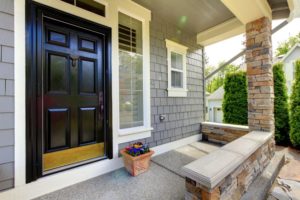
front porch with black door and stone wallThis one tops the list for me.

Some buyers are discouraged—or even charged extra—to attend their own inspection.

That doesn’t work for me, which is why I only recommend and work with inspectors that allow my relocation buyers and I to tag along for every inspection.

I’ve spent thousands of hours attending inspections with buyers over the past 25 years. That firsthand exposure has made me a better agent and my clients more knowledgeable homeowners.

Today, I walk through homes pointing out likely inspection issues before offers are written, allowing buyers to negotiate based on insight—not hope.

For relocation buyers who can’t attend inspections in person, I attend on their behalf.

👉 For additional insider insight, read my post about some cons of living in Grand Junction.

Why the Agent You Work with Matters When You’re Relocating

Relocation buyers don’t need hype.
They need clarity—before decisions are made.

Experience in multiple markets allows an agent to anticipate confusion, ask better questions, and protect buyers from surprises they didn’t know to look for.

When Grand Junction relocation buyers understand why the process feels different, they can navigate it with confidence instead of frustration.

👉 Learn more about me and how I serve my clients.

Final Thought for Grand Junction Relocation Buyers

None of these differences are reasons not to buy in Mesa County.
But being caught off guard by them is a reason deals fall apart.

My goal is simple:
I want my relocation buyers to be confident, informed, and prepared—before they ever fall in love with a home.

Reach out to discuss your relocation with confidence — send me an email.

Common Grand Junction Relocation Buyer FAQs

  1. Why do Grand Junction relocation buyers feel unprepared when buying a home?
    Because buying practices in Grand Junction differ from large metro markets, including inspections, property infrastructure, land use, and local disclosures. My relocation buyers are often surprised when familiar assumptions no longer apply.
  2. What is the most common mistake Grand Junction relocation buyers make?
    Assuming the buying process works the same as their previous market. This can lead to overlooked inspections, misunderstood land characteristics, and unexpected costs after closing.
  3. Should Grand Junction relocation buyers use a local lender because of these nuances?
    Our local lenders understand Mesa County’s unique processes, rural lot financing, appraisal differences, and Colorado-specific requirements. They guide my relocation buyers through these nuances, ensuring a smoother, faster, and less stressful home purchase.
  4. How can Grand Junction relocation buyers avoid costly surprises?
    By working with a relocation-experienced local professional who understands both metro and Western Colorado real estate systems and can identify risks early in the process.

If you would like to speak with a local Grand Junction Mortgage Lender, I highly recommend you start that process here.

Check out my Google Business profile to discover the services I offer to all relocation clients.

Paul Aspelin sitting at the conference table at the officeLive your vacation in Grand Junction!

Paul Aspelin Reviews and Recommendations
https://movetograndjunction.com/paul-aspelin-reviews-and-recommendations


Connect with me on LinkedIn

PAUL ASPELIN, Relocation & Listing Expert
REALTOR®, GRI, SRES®, CNE
Serving Grand Junction, Palisade, Fruita, and all of Mesa County
Text or Call (612) 306-9558

© 2026 Paul Aspelin, REALTOR®. MovetoGrandJunction.com Copyright protected. All rights reserved.

What’s Moab?

Before we can talk about the many adventures near Moab, first you might be asking “Where is Moab, Utah?” I can still remember the first time we heard the word “Moab”. We were standing at the Colorado Mesa University booth at the College Fair at our local high school in Chanhassen, MN. The 2 representatives were raving about going to Moab for the weekends and all they had access to in relation to outdoor activities. Then went on and on — our eyes got wide, so did our oldest daughter’s. She eventually attended CMU for college, and then we moved to Grand Junction. Needless to say, what those representatives said that day changed the course of our lives, for the better.

At first, we thought Moab was some adventure park, an entertainment venue to visit. We slowly realized it’s the name of the popular adventure town in a remote area of SE Utah, but only 90 miles from Grand Junction. My daughter jokes it’s just an hour away. The speed limit on I-70 in Utah is 80 mph…

Two Ways to Get to Moab, Utah

The Fastest Route

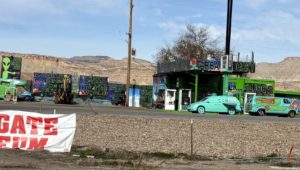
I-70 gas station with Scooby Doo Mystery Machine parked out frontFruita, CO is the last stop in Colorado on I-70 before entering a long stretch with NO SERVICES on the way west to Moab. So get your drinks and go to the bathroom before you leave the area. There is one pit toilet as you cross the border and a rest stop with just bathrooms and a short hike up a hill if you need a little exercise.
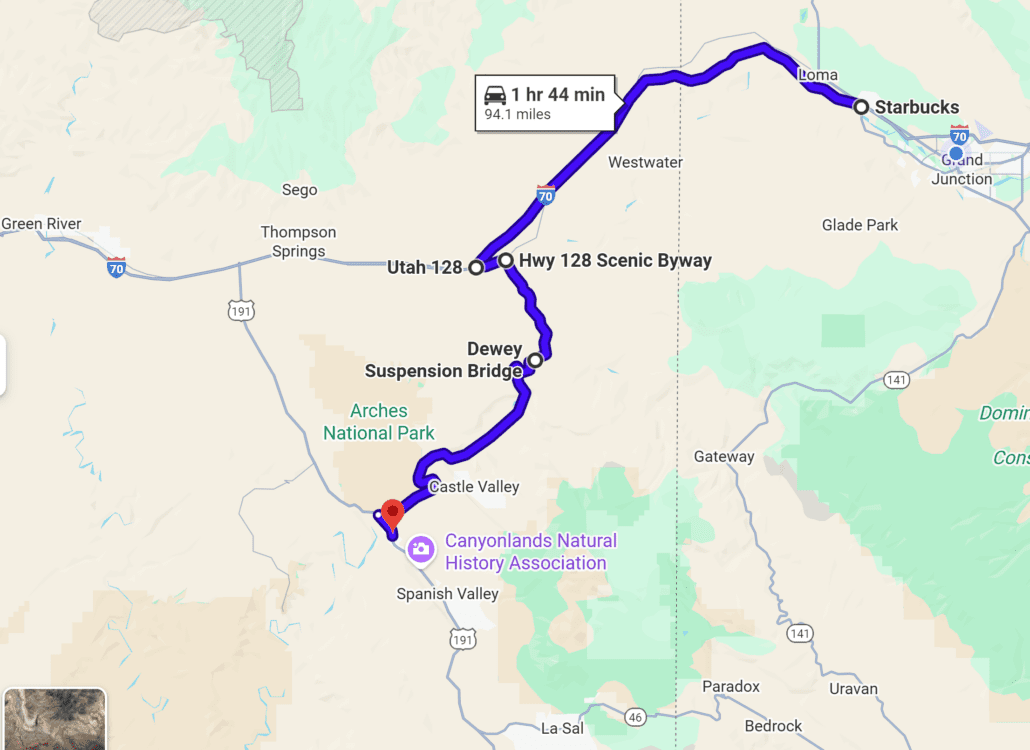
Stay on I-70 until Exit 182/Hwy 191. Go south on Hwy 191 for about 32 miles and you will arrive in Moab. There are two gas stations at exit 182, the funky one with the Mystery Machine from Scooby Doo parked out front, and a new Golden Gate gas station.

The Scenic Route

If you want the most scenic entrance into Moab from Grand Junction, take the earlier Exit 204 on I-70 near Cisco. Look for Hwy 128 Scenic Byway and go South. There are two exits on I-70 to get onto Hwy 128, the first one is very bumpy gravel road with lots of dips and potholes, but it does go through “the town” of Cisco (it has a General Store and that’s about it). We prefer the second exit, #204, and backtrack a little. Once on Hwy 128 it’s beautiful. You are approaching the La Sal mountains as you drive along shore of the Colorado River. We did a river float into Moab that left from a landing in Cisco. Hwy 128 intersects with Hwy 191, turn left, and you’ll be in the town of Moab.

Google map image Fruita to Moab via the Colorado River

Things to Do in Moab, Utah

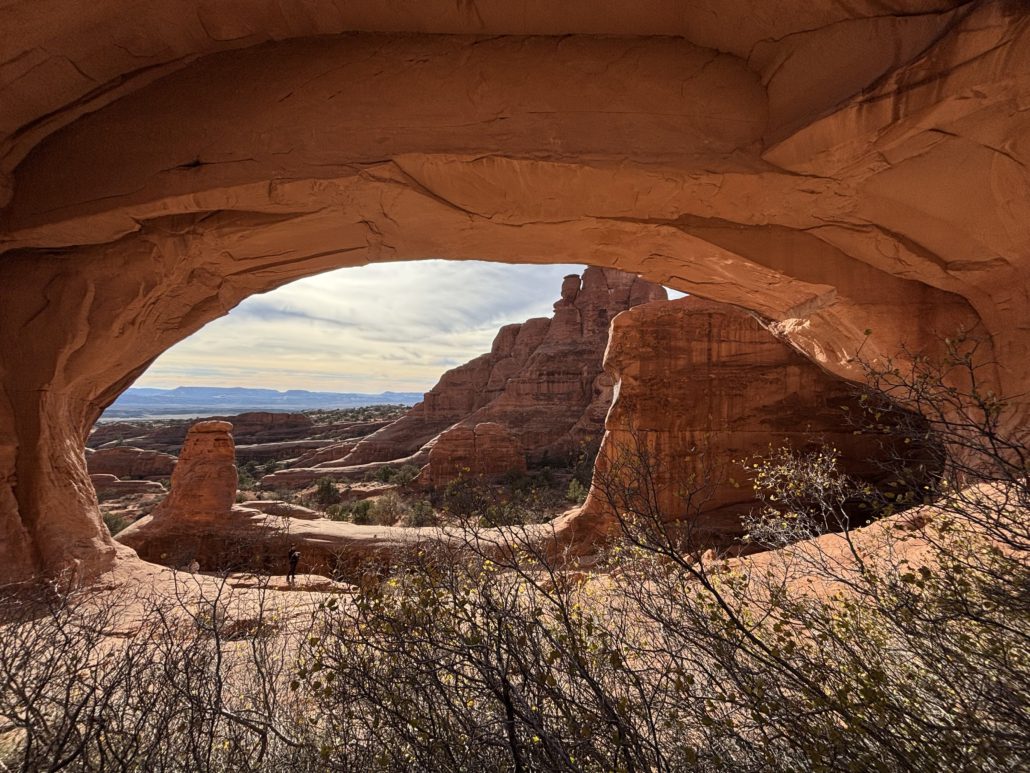
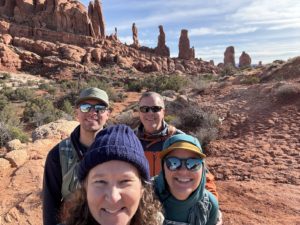
Josh, Paul, Emma and Michelle hiking to Tower Arch in Arches National Park

Josh, Paul, Emma and Michelle hiking to Tower Arch in Arches National Park

1 – The most popular thing to do in Moab is to experience Arches National Park. We have been there several times. An easy drive in, drive out on the same road. It’s 18 miles from the Visitor Center to the end. Lots of trails and arches along the way, many very close to the road. For 2026, timed-entry reservations are no longer required!

See our post about the time we took the 4×4 back door into Arches to hike to Tower Arch.

If you want to read about more moderate and difficult hikes in Arches, I suggest you read the advanced guide to hiking in Arches National Park, written by our daughter, Emma Aspelin. On her blog, Emma Gets Outside, she goes into depth describing multiple hikes in Arches, including the hike to the iconic Delicate Arch, which we have not done. She writes about easy, moderate, and difficult hikes. You won’t find us writing about difficult hikes on this blog. She’s way more experienced than we are.

Insight Tip: Did you know the second largest concentration of arches is in Colorado? Yup, you don’t need to drive to Utah to see them, check out Rattlesnake Arches Trail on the All Trails app, we did the hike, it was stunning! It’s in the McInnis Canyons National Conservation Area.

2 The second most popular adventure near Moab to explore is Canyonlands National Park. Looking down over a 1000 feet or more to the river below is outstanding. There are many cool sites and overlooks that will take your breath away. Our daughter got married near Canyonlands. THAT was incredible! Here’s how the National Park Service describes Canyonlands…

“The Colorado and Green rivers wind through the heart of Canyonlands, cutting through layered sandstone to form two deep canyons. In stark contrast to the hot, sunny desert above, the river corridors are remarkably green, shady, and full of life. Both rivers are calm upstream of The Confluence, ideal for canoes, kayaks, and other shallow watercraft. Below The Confluence, the combined flow of both rivers spills down Cataract Canyon with remarkable speed and power, creating a world-class stretch of whitewater.”

3 – Dead Horse Point State Park is near Canyonlands and is worth the drive too. Amazing views, especially the night sky! Read more on that below.

Top Day Trips from Grand Junction, Colorado

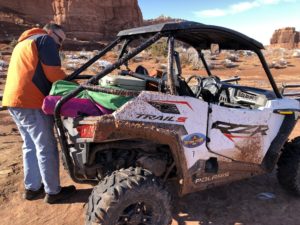
Muddy November ride near Moab

4 – After that, I imagine it’s all of the mountain bike and ATV/jeep trails that attract most people to experience adventures near Moab. We rented a side-by-side ATV and followed the trails one day, stopped for lunch, got a little muddy as it was in November, but we had a blast! I highly recommend doing that. We mention this experience in our Day Trips from Grand Junction post too.

“Jeep Week” is a 9-day event in the spring known as Easter Jeep Safari that attracts thousands of 4×4 enthusiasts. Thankfully, there is a lot of BLM land around Moab for free camping and overlanding to accommodate the influx of jeep owners. We were there once during this event; the town was super busy!

Tip: You do need to go online and take a safety test and get a certificate before you can drive an ATV in Utah. It’s called a Non-Resident OHV permit, here’s the link for more information, Utah Division of Outdoor Recreation. https://recreation.utah.gov/off-highway-vehicles/ohv-registration-and-permits/non-resident-ohv-permits/

5 – The town of Moab itself is full of unique shops, gear for purchase or rental, ATV/UTV/mountain bike rentals for all your adventure needs. There are plenty of hotels, motels and campgrounds. Lots of dining options, Pasta Jays is one of our favorites for Italian food. We had a delicious traditional Thanksgiving meal on Thanksgiving at the Moab Brewery. A good time for ATVing because it’s not so hot. Lots of guide services for a variety of adventures near Moab.

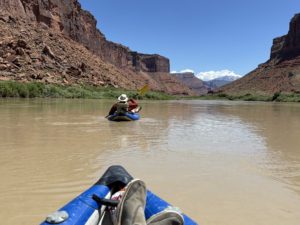
Michelle and Paul floating down the Colorado River near Moab Utah

Paul and I floating down the Colorado River approaching the La Sal Mountains

6 – The Colorado River is another top attraction. There are river boat guided trips you can take or launch your own paddle board, canoe, or kayak and float down the river through calm waters or rapids. There are river cruises day and night, and a couple of jet boat outfitters too if you’d like a fast ride on your vacation in Moab. We launched our rubber rafts, called duckies, near Cisco and paddled towards Moab, pulling out near the campgrounds along Hwy 128 Scenic Byway.

7 – If you’re going to be in the area for a few days, I highly recommend you drive the loop up into the La Sal Mountains. A “cool” adventure near Moab because the temps are normally lower in the mountains. It’s a 60-mile scenic drive from red-rock canyons to alpine peaks with breathtaking views year-round.

From Moab, head south on Hwy 191 approximately 8 miles and turn left at the Ken’s Lake/La Sal Mountain Loop Road sign. Take a right at the T-intersection and follow La Sal Mountain Loop Road up into the mountains. The road winds through the mountains and descends via switchbacks towards Castle Valley. At the intersection with Forest Road 207, take a left to get to Castle Valley and continue for about 10 miles. Take another left at the Hwy 128 intersection to return to Moab.

Plan about 3 hours to drive the stunning loop, depending on the number of stops you make to soak it all in. We saw some cool mountain cabins up there. It would be fun to rent one of those on a future trip while exploring new adventures near Moab.

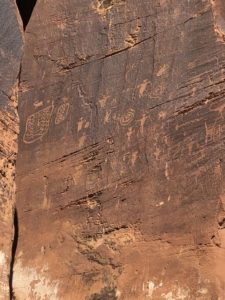
Petroglyphs near Moab

Petroglyphs near “Wall Street” Moab, UT

8 – Canyoneering and rock climbing are very popular in Moab too. We’ve noticed climbers several times on our trips. When you drive past Wall Street Climbing Area on Potash Road there are usually climbers there. We stopped there along that stretch of road to see the Petroglyphs. You get on Potash Road from the main Hwy 191. It’s the same road that takes you to the trailhead of the Corona Arch hike I mention below. There are several places that offer horseback riding too.

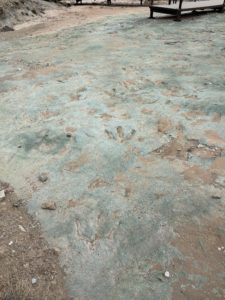
dinosaur tracks near Moab Utah

Dinosaur Tracks!

9 – Dinosaur Tracks. We went to the Mill Canyon Dinosaur Tracksite twice. I was amazed that the dinosaur tracks are just there, out in the open. Sure, there is a little fence to keep the critters out, but otherwise there is a simple boardwalk that takes you right up to the tracks. It is amazing and an easy side trip just 15 miles north of Moab off Hwy 191. Go there when you want to see something very cool, and it’s free.

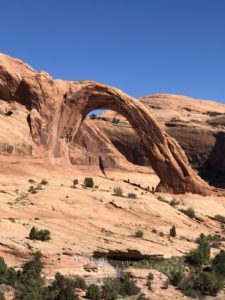
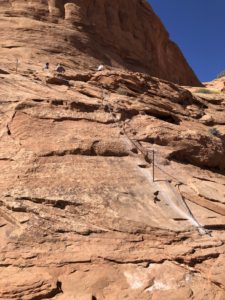
10 – If you want to do some hiking away from the crowds, consider hiking Corona Arch. It’s a scenic hike with views of a large arch at the end. There’s quite an elevation gain at the beginning, and a few challenges like climbing a metal ladder and holding a safety chain along a ledge. We went slow and felt very proud of ourselves for doing the moderate 2.4 mile out and back hike. After our hike, we snagged a spot in the nearby campground under a tree to get some shade and had a picnic lunch. Bring plenty of water, there’s hardly any shade along the trail and it can get hot in the summer.

Corona Arch west of Moab

Corona Arch

Corona Arch chain section

11 – There are several International Dark Sky Parks in Utah. In fact, the Dead Horse Point State Park Scenic Overlook is credited as one of the most photographed scenic vistas in the world! Moab is home to some of the darkest night skies anywhere. Get amazing views of the stars and the milky way. Arches and Canyonlands are International Dark Sky Parks too. Both Arches and Dead Horse Point offer ranger-led night sky activities.

We haven’t stayed here, but it’s on our list. Under Canvas Moab is one of the world’s first Dark Sky resorts where you can experience the wonders of the night sky. Glamping at this upscale, outdoor hospitality location is available generally March through October in their amazing safari inspired canvas tent accommodations. Located just 7 miles north of Moab. Here’s more info: https://www.undercanvas.com

Your Moab Adventure Awaits

Every time we go to Moab we find something new to do. There are so many adventures near Moab for every skill level and adrenaline desires. On our return trip one time, we headed south out of town, turned east and went over the La Sal Mountains, then ventured on to Telluride, then back to Grand Junction. That was a cool drive. It was November, light snow, the mountains were gorgeous.

Day Trips from Grand Junction

We have written about many day trips from Grand Junction. Going to Moab, Utah is one we do frequently because it’s so close and usually I-70 doesn’t get shut down west of here! We feel like we are living a vacation all the time. People spend a lot of time and money to travel to destinations that, for us, are just a 1–2-hour drive from Grand Junction.

If you want us to write about local attractions or other areas of interest, let Paul know. There is so much to see and do in Grand Junction and the surrounding mountain and desert communities. Paul has lots of stories he can share.

If you are considering moving to Grand Junction, Paul will give you a tour when you visit the Grand Valley. Learn more about Paul and how he’s been serving his clients since 2001. Email Paul.

Michelle and Paul Aspelin at the Moab Brewery

Thanksgiving Dinner at Moab Brewery

Live Your Vacation in Grand Junction, but don’t forget the adventures near Moab!

Follow Live Your Vacation in Grand Junction on Facebook and Instagram
Follow Move to Grand Junction on YouTube

Guest Post by Michelle Aspelin

Growyourmindshare.com
Connect with Michelle on LinkedIn

© 2026 Paul Aspelin, REALTOR® MovetoGrandJunction.com and Michelle Aspelin. Copyright protected. All rights reserved.

Cost of Living in Grand Junction, Colorado: What Newcomers Need to Know

What People Really Mean by “Cost of Living”

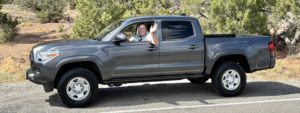
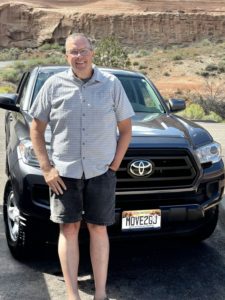
Paul Aspelin waving from his Toyota TacomaWhen I provide guided tours of Grand Junction, people usually ask me about the cost of living in Grand Junction, and ironically, they’re rarely asking for a spreadsheet. What they really want to know is whether life here will feel easier, tighter, or more comfortable than where they live now. Cost of living isn’t just about numbers — it’s about how housing, daily expenses, and lifestyle come together in real life. For most relocators, it’s also important to understand more about why people are moving to Grand Junction.

Personal insight tip: As someone who works directly with people relocating to Grand Junction, this is usually the first question they ask — and almost never the last. Spreadsheets and websites cannot replace firsthand insight about the cost of living in Grand Junction. Sharing my lived experience will help far more than raw statistics alone.

Considering a move to Grand Junction but don’t know where to begin? Get started with our step-by-step relocation guide

Why Cost of Living Isn’t a Single Number

Cost of living is often presented as a single score or index, but that approach misses the bigger picture. Two households earning the same income can experience Grand Junction very differently depending on housing choices, commute patterns, and lifestyle priorities.


Personal insight tip: I’ve seen buyers with nearly identical budgets have completely different experiences here simply based on where they choose to live and how they spend their time.

Your personal expectations and lifestyle play a significant role in comparing different neighborhoods, cities, homes, and lifestyle. Truly understanding cost of living means looking at how expenses align with how you actually live — not how a calculator assumes you live.

Grand Junction Housing: The Biggest Cost — and the Biggest Variable

Housing is the largest factor influencing the cost of living in Grand Junction, and it’s also where experiences vary the most. Buyers relocating from larger metro areas are often surprised by how much home they can get relative to lifestyle, even if prices feel higher than expected at first glance.

Personal insight tip: Many people I work with initially focus on price alone, but neighborhood choice and home type usually end up having a bigger impact on how affordable Grand Junction feels long-term. There is a significant difference between a $400,000 home in the Redlands versus a $400,000 home in Clifton. One may require updating and repairs, while the other might be move-in ready. Same price point, different communities, different homes, very different cost of living.

Renters and buyers face different considerations, and expectations play a leading role. Housing costs here will be closely tied to your goals for where and how you live, not just market averages.

Wondering about housing costs? Check the report

Everyday Living Costs: Where People Feel the Difference

Beyond housing, people notice differences in everyday living costs almost immediately. I personally tell everyone how incredibly light the traffic is here, compared to the larger city I came from. My wife and I joke all the time how close everything feels.

Shorter commutes mean lower fuel expenses and less time spent in traffic. Utilities are influenced by climate and home type, while daily conveniences like parking and access to recreation tend to feel simpler than in larger cities.

My quality of life report can be helpful when comparing Grand Junction to your current city.

Personal insight tip: Most people I work with who are relocating to Grand Junction are doing it for the lifestyle. They quickly realize the biggest savings isn’t a budget line item — it’s getting back more of their quality time. Less driving, less congestion, and easier access to everything adds up quickly.

For many residents, Grand Junction’s outdoor lifestyle replaces higher-cost entertainment found in larger metro areas. When my daughter was in college at Colorado Mesa University here in Grand Junction, she would come home each summer and work to save money for spending while away at college. She joked at the end of each year that she still had money leftover because everything she loved to do was outdoors and practically free!

Taxes and Colorado-Specific Considerations

Taxes are an important part of any cost-of-living conversation, but they don’t need to be overly complicated. Colorado’s income tax structure is often more straightforward than what people are used to, and property taxes in Mesa County are frequently a pleasant surprise.

Many people automatically think they need to relocate to no state income tax states like Florida to get the most out of every dollar they have. You need to look beyond state income taxes for a fair comparison.

Check out my article on comparing taxes.

Personal insight: Moving from Minnesota where our top state income tax rate was close to 10% makes most other places seem extremely attractive. The thing that I’m most impressed with living in Grand Junction is how low the property taxes are. The property taxes on the same valued home in Grand Junction are literally a third of what I was paying in Minnesota.

The Smart Way to Compare Your Cost of Living

The most accurate way to understand whether Grand Junction is affordable for you is to compare it directly to where you live now. City-wide averages can only go so far and often create misleading expectations. This is exactly why I recommend using a side‑by‑side comparison tool, or good old-fashioned piece of paper instead of relying on national averages. It gives you more clarity based on your situation — not assumptions.

This approach removes guesswork and helps people make confident decisions before they move.

Personal insight: One other area we save money that you won’t find in a cost-of-living calculator is heating and cooling. With the mild weather here, we experience what are referred to as shoulder seasons each spring and fall. These periods of up to two months don’t require any heat or cooling, just open the window and the temperature in your home is perfect, day and night. It’s amazing!

Find out more about our average weather throughout the year.

Is Grand Junction Affordable?

Property Tax ValuesFor most people relocating from larger metro areas, the answer is yes — especially when affordability is viewed through the lens of lifestyle and long-term value. Grand Junction continues to offer a balance of housing options, outdoor access, and manageable daily expenses.
Although home prices have increased dramatically over the past few years (along with the rest of the country) you can still find a good home at a fair price. In Grand Junction, affordability has quite a few variables including one you may not see as often in your current city. Homes with certain views or vantage points will fetch top dollar over a home without them. As always, real estate is about location, location, location!

Personal insight: Compared to many Colorado Front Range and West Coast markets, buyers often tell me Grand Junction feels more balanced — not necessarily cheap, but more livable. Meaning you are also paying for a lifestyle that is unlike anywhere else.

Affordability is always relative, but expectations here are often exceeded.

Read my post about what relocation buyers find shocking about our Grand Junction housing market, and I did too!

Grand Junction “Cost of Living” Community Insights Tool

Are you relocating to Grand Junction or comparing it to where you live now? My interactive “cost of living” Community Insights Tool lets you compare Grand Junction, CO (81505) with any other city or ZIP code using real, data-driven information. Whether you’re planning a move, researching neighborhoods, or just getting familiar with the area, this tool helps you make smarter, more confident decisions based on facts, not guesswork.

Try out the “cost of living” Community Insights Tool.

Enter your current location, then click on compare with another location. Type in Grand Junction, CO 81505. (One of our zip codes)

Across the top toolbar, you will be able to explore and compare:

  • Housing– Where you can compare median home prices, and general home statistics
  • People – Compare population, income, age, and household breakdown
  • Schools – Compare elementary, middle, high, and private schools
  • Environment – You can compare climate and a health cost index
  • Quality of life – Which includes a cost-of-living comparison, commute times, and health care costs.
  • Map– This will allow you to compare nearby parks, schools, or other neighborhood amenities. Specific address location should be entered for the best result.

Cost of Living Is Only Part of the Decision

Cost of living is a key factor, but it’s only one piece of the relocation puzzle. Neighborhood selection, housing strategy, and lifestyle priorities all influence how affordable a place truly feels.

Personal insight: In my experience, the people happiest with their move to Grand Junction are the ones who look beyond the numbers and focus on how they actually want to live. It’s hard to put an exact dollar amount on a superb quality of life.

You’re right to be careful with your research — and now hopefully understand you’ve got a friend in Grand Junction you can rely on to give you straightforward advice and insight. My only goal with your relocation is to help you understand why you’ll love living in Grand Junction as much as I do.

When cost of living is viewed in context, it becomes much easier to decide whether Grand Junction is the right fit — financially and otherwise.

Ready to explore your options?

It’s time to Live Your Vacation in Grand Junction

Follow me as I share what makes living in Grand Junction special!

Facebook: https://www.facebook.com/LiveYourVacationinGrandJunction
Instagram: https://www.instagram.com/liveyourvacationingj/

Your Grand Junction Relocation Guide is Paul Aspelin. Here he is standing in front of his Toyota TacomaMove to Grand Junction… We’ve been waiting for you!
PAUL ASPELIN, REALTOR®
GRI, SRES®, CNE
Grand Junction Relocation & Listing Expert

Connect with me on LinkedIn or send me an email.
Learn more about my experience and how I serve my clients

© 2026 Paul Aspelin, REALTOR®. MovetoGrandJunction.com Copyright protected. All rights reserved.

The ONLY complete, local insider guide to flying in and out of the Grand Junction Airport (GJT)

First, let’s talk about the history of the Grand Junction airport (GJT). It opened in 1930 as Walker Field. It’s the largest on the western slope and the third largest in the state after Denver (DEN) and Colorado Springs (COS). You get a beautiful view sitting in the gate area because you can see the planes take-off and land with the Book Cliff Mountains in the backdrop. There are only 6 gates, so it’s cozy and you can hear all the flight announcements. Flights through GJT are not cheap, so do your research and book far in advance if you can.

Fun Tip: This airport rarely seems busy which is a huge plus for traveling when you have a day full of connecting flights. The last time I picked up a friend they texted me saying “I landed” and I replied with “I know, I saw your plane land from the parking lot. It was the only one around.”

Cheapest alternate airport connections to GJT

To save money getting to Grand Junction, you can fly to Denver or Salt Lake City (each within about 4 hours) and drive to Grand Junction. However, when it comes time to fly back, I highly recommend you drive there one day and take a flight out the next day. Don’t drive and fly on the same day, especially to Denver as I-70 traffic is quite unpredictable any time of the year with accidents, avalanche closures, forest fires and mudslide closures. Yes, we’ve been delayed or diverted because of all these events. Read my post called I-70: What it’s really like to drive from Denver to Grand Junction. It will make you laugh!

You can fly into Montrose (MTJ) sometimes for less, and that’s just about an hour south. They have on-site parking for departures and have recently expanded their terminal and services. If you are a Southwest Airlines fan, they fly into Montrose and can offer some low priced tickets. We have dropped off and picked up friends who flew into the Montrose/Telluride airport. During off peak times, you are pretty safe only arriving 90 minutes before your scheduled flight.

Flying into Grand Junction Regional Airport to explore the area?

👉 Many of my clients start their relocation journey the same way—using a quick visit to get a feel for neighborhoods, lifestyle, and whether Grand Junction is the right fit.

If you’re planning a visit, I’m happy to help you map out the best areas to explore while you’re here —just [reach out here].

Grand Junction Airport Ranks in the Top 10% of Airports Worldwide

Grand Junction Regional Airport is one of only three airports in the U.S. to receive a five-star rating. Three airports in Hawaii received a five-star rating, along with Salt Lake City, Boise, and Grand Junction. The star ratings range from one to five stars. Airlines and airports, in the top 10%, offer the best on-time performance to receive a five-star rating. Nearly 85% of Grand Junction Airport’s flights arrived and departed on-time.

In addition to the on-time performance, Grand Junction Regional Airport ranked number eight among North America’s small airports in “Turnaround Kings”. This rating accredits airports that receive late arrivals and turn the aircraft around for an on-time departure.

Pro Tip: During winter and times of heavy travel avoid taking the last or first flight of the day out of GJT. I’ve personally experienced delays when the last flight the night before got in late (because of snow in Denver) and the pilots didn’t have enough rest time before the first flight out, so that was also delayed.

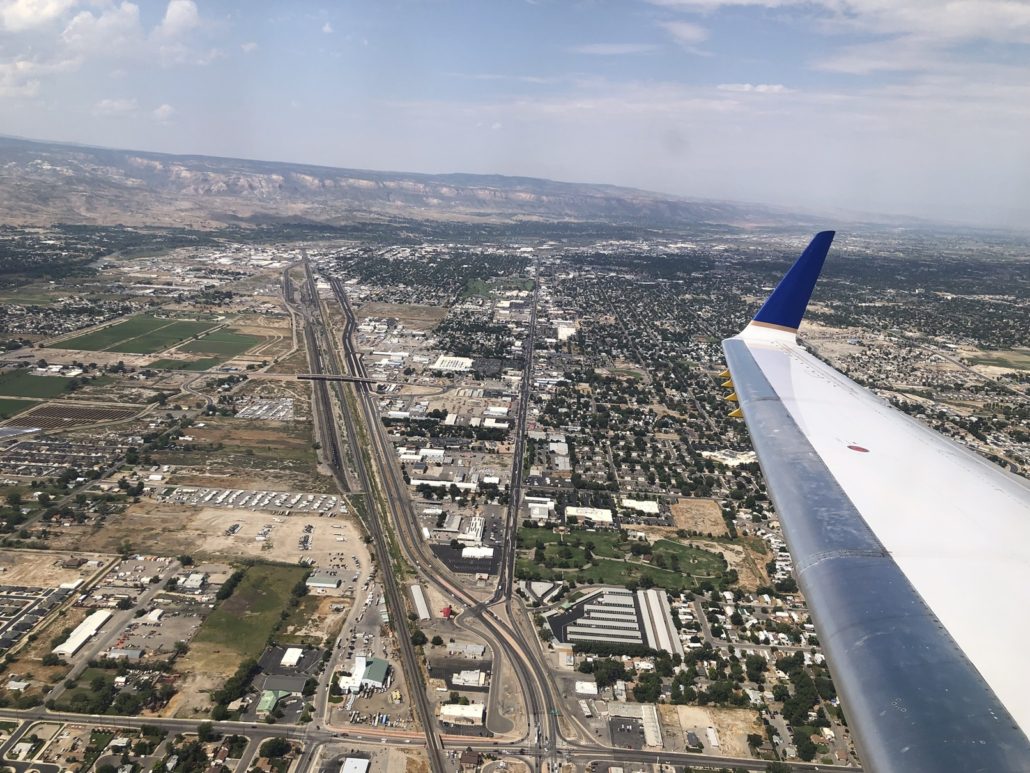
Photo taken on one of our flights leaving GJT.

Grand Junction Airport

Flying over Grand Junction

Airlines serving Grand Junction Airport (GJT)

Allegiant Airlines, American Airlines, Breeze Airways, and United Airlines all provide flights into GJT. These carriers can bring you to Grand Junction from the following major cities for connecting flights: Denver (DEN), Dallas/Fort Worth (SFW), Phoenix (PHX), Los Angeles (LAX), and Las Vegas (LAS). Breeze is offering direct flights to San Francisco (SFO) and also flies to John Wayne Orange County/Santa Ana (SNA).

Where to Eat and Shop at the Airport

For your departure from GJT, there is a grill and concessions available at the airport. You can order a meal to be prepared fresh or grab a premade sandwich, get your coffee, or other food items. There’s a gift shop if you need postcards to send to your loved ones or a magazine or book for the flight. Or, plan ahead and get a free book from the Friends of the Library books for sale at the Grand Junction Library. Typical Grand Junction souvenirs and gifts as well as snacks for on the plane. Plus, right in the gate area is a full-service bar serving passengers 21 and older.

Parking at GJT

Here’s the info for parking at the Grand Junction airport so you have the most up-to-date rates and availability. Now they don’t offer covered parking, just an open lot, but that’s reasonable considering what you’d pay to park at a large international airport. Departures from the Grand Junction airport are very convenient and affordable!

  • 0-2 Hours — FREE
  • Each Additional 20 Minutes — $2.00
  • Daily Maximum — $14.00
  • Parking Longer Than 45 Days? – Contact: (970) 245.5154

Pro tip: The parking lot at GJT allows people to park for FREE for up to 2 hours. So drop your car off and meet your friends inside the airport for a special in person welcome!

Traveling to Grand Junction for a weekend? Check out my two-day itinerary to make the most of your visit!

Easy Pick-Up and Drop-Off

Grand Junction AirportEvery time we have picked up friends or relatives at the airport, there hasn’t been more than 5 cars out front at the curb. It’s very easy to get up close to the doors for arrivals or departures. I know the standard is to arrive 2 hours before your flight for check-in, but when flying out of the Grand Junction airport, you probably can get by with arriving 1-1.5 hours ahead of time. There’s just one security checkpoint, one conveyor to scan your bags. The line moves fast, unless the TSA agent gets chatty, then it takes longer.
Budget Car Rental and Ground Transportation in Grand Junction, CO

There are several convenient ground transportation options available when you arrive at the Grand Junction Regional Airport. For rental cars, major companies like Alamo, Avis, Enterprise, Hertz, and National operate directly at the airport, making it easy to pick up a vehicle and get on your way.

If you prefer public transit, you can take a bus through Grand Valley Transit or Bustang, which connects travelers to destinations throughout Colorado. There are also dedicated shuttle services to popular western Colorado destinations such as Aspen, Telluride, and Moab, Utah.

For travelers looking for budget-friendly alternatives, apps like Turo allow you to rent someone’s personal vehicle—often at a lower rate than traditional agencies.

Because Grand Junction is a smaller, easy-to-navigate community, many locals simply arrange rides with friends or neighbors. Most homes are only 10–20 minutes from the airport, and traffic delays are rare compared to larger cities, making pick-ups and drop-offs quick and stress-free.

Local Tip: I get asked quite frequently if Grand Junction has rideshare services like Uber available. Yes, we do!

If you rent a vehicle and are looking for even more adventure during your stay in Grand Junction check out my Top Day Trips from Grand Junction.

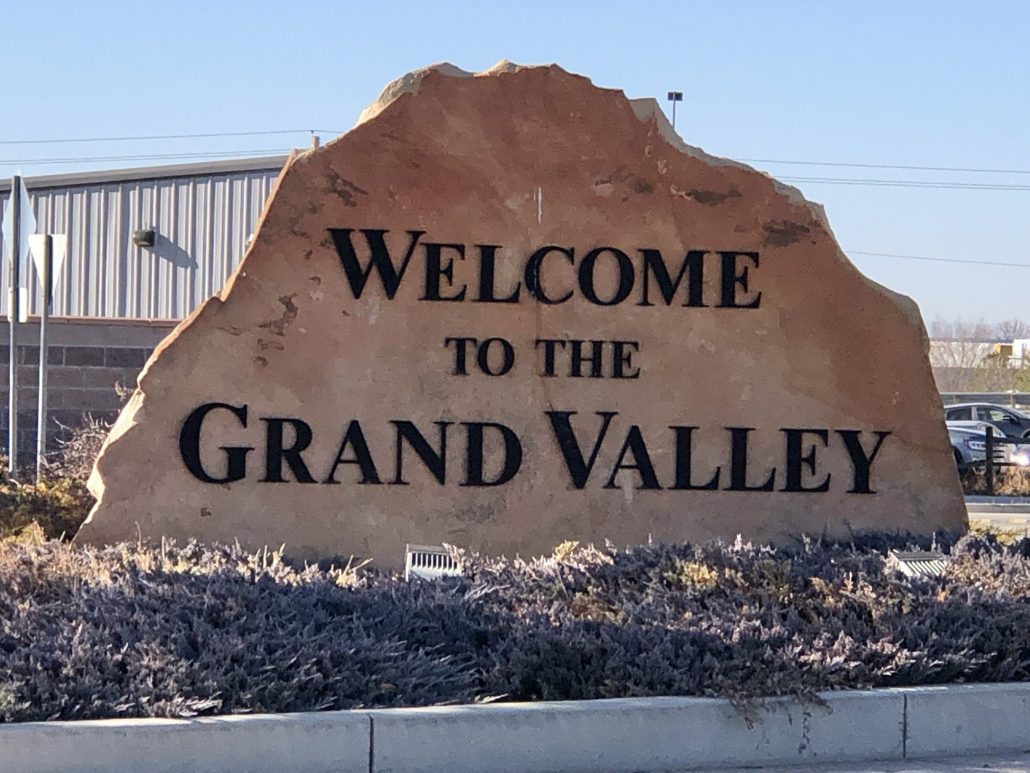
Grand Junction Airport Welcome SignReasons to fly directly into the Grand Junction
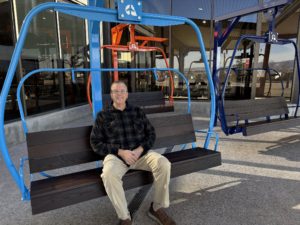
We appreciate the convenient service of a small local airport and are thankful it’s here. It has everything you need as a traveler and not much more! We love living in Grand Junction and you will too!

If you are planning a trip to Grand Junction, please let me know. I’d love to show you around the area if this is your first visit. As a licensed REALTOR® in Colorado, I can even show you some properties during your visit to Grand JunctionFruitaPalisade,and our surrounding communities in Mesa County.

Interested in searching the local Grand Junction MLS before your visit? Start your home search on my site.

Pro Tip: If you’re visiting to check out the area for a possible relocation, don’t forget to take advantage of my popular relocation guide offer!

If you are considering living in Grand Junction. Check out my post with the average monthly temperatures in Grand Junction. There is no reason to hunker down during the winter months when you live in Grand Junction. Read that popular and entertaining post too!

I’ve been serving clients since 2001 and would love to help you learn more about Grand Junction! Read what I learned in the first three months of living in Grand Junction.

Reach out to discuss your visit, contact me.

Let me help you… Live Your Vacation in Grand Junction!

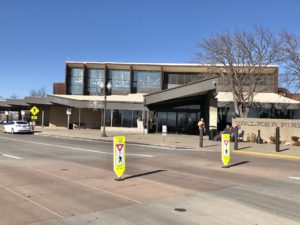
Paul Aspelin at the Grand Junction Airport (GJT)

Paul Aspelin at the Grand Junction Airport (GJT)

Live Your Vacation in Grand Junction Facebook Page
Live Your Vacation in GJ Instagram

We’ve been waiting for you!

Text/Call 612-306-9558 with your questions.

Paul Aspelin, Realtor®
GRI, SRES®, CNE

© 2026 Paul Aspelin, REALTOR® MovetoGrandJunction.com. Copyright protected. All Rights Reserved. Licensed in Colorado.

Grand Junction Housing Market Update – Mesa County Stats and Trends

If you’re thinking about a Move to Grand Junction, and want to stay up to date on Mesa County real estate stats and trends, or see how strong the Grand Junction housing market is right now, you’re in the right place.

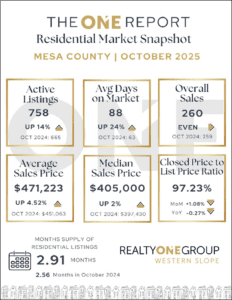
Every month, Realty ONE Group Western Slope publishes “The ONE Report,” a snapshot of local market activity. Below you’ll find the October 2025 key stats — and if you’d like a customized and current monthly-specific report, contact me today.

Are you interested in exploring Grand Junction and Mesa County homes for sale? Try my FREE home search tool today!

Monthly ONE Report – Mesa County Market Stats

A preview of “The ONE Report” for the month of October 2025

Realty ONE Report Monthly Stats for Grand Junction Real Estate Market


The monthly ONE Report not only outlines the most current Mesa County Market stats, but also gives you year-over-year guidance on:

  • Active Listings – current homes for sale in Mesa County
  • Average Days on Market – how quickly homes are selling
  • Overall Sales – total homes sold this month
  • Average Sales Price – typical sales price across the county
  • Median Sales Price – midpoint sales price in Mesa County
  • Closed Price to Listing Ratio – how close homes sold to their listing price

ShowingTime® Reports

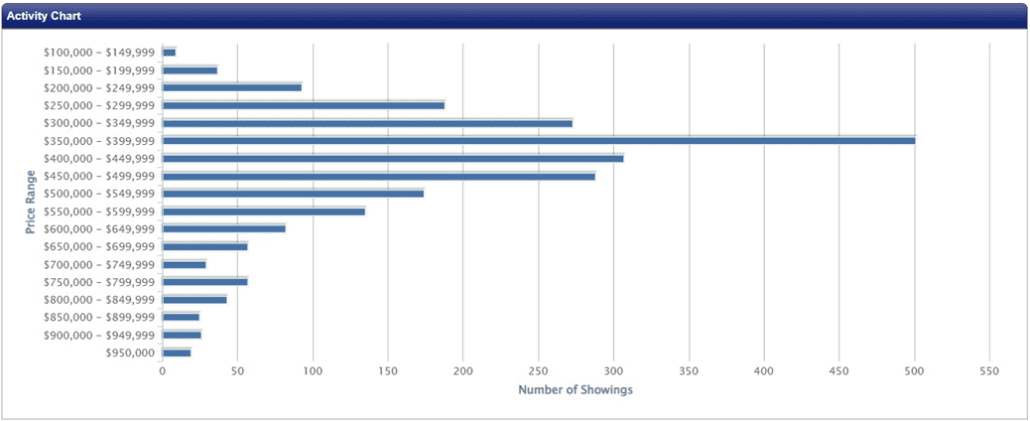
Understanding how buyers are interacting with listings is just as important as tracking sales. That’s where ShowingTime® reports come in. These reports track showing activity across Mesa County and Grand Junction, giving you a clear picture of which price ranges and neighborhoods are attracting the most attention.

By analyzing showing activity, sellers can price homes strategically, and buyers can identify competitive market segments. Whether you’re looking to buy or sell in Grand Junction, these insights provide a data-driven view of the market that goes beyond just sales numbers.

Pro tip: I utilize these reports with every seller I work with. Read my article about the ultimate listing guide

Monthly Real Estate Showing Activity Report for Grand Junction

The ONE Report gives you a great overall residential market snapshot into the real estate activity in Mesa County, but tracking showing activity will outline which pricing segments are getting the most activity.

ShowingTime® activity report for October 2025

This Grand Junction real estate showing activity report allows you to view the total number showings and the competition for certain price ranges over any specified time period.

This report highlights activity within $50,000 pricing segments and can be hyper customized to any city within Mesa County or even a specific neighborhood. Valuable information whether you are looking to buy a home in Grand Junction or sell a home in Grand Junction.

Contact me for a customized showing activity report for any city or neighborhood and include the time frame of your choice.

Pro Tip: If you’re planning a home sale, access to these types of reports can really aid you in pricing your home to attract the highest number of potential buyers, reducing market time.

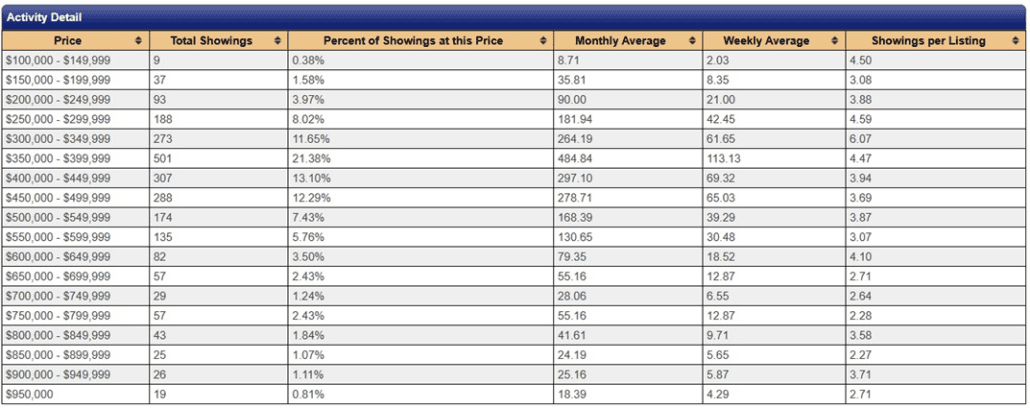
Monthly Real Estate Showing Detail Report for Grand Junction

The ShowingTime® detail report breaks down the showing activity by;

  • $50,000 pricing segment – Showings in this range
  • Total Showings – Number of showings for the specific area searched
  • Percentage of Showings at this price – Percentage of overall showings
  • Monthly average – Monthly average of showings per home
  • Weekly average – Weekly average of showings per home
  • Showings per listing – How many showings the average home may receive

Request Your Customized Grand Junction Housing Market Report

I can provide you with the most recent monthly ONE Report, a customized showing activity report, or a showing detail report for any period, from activity in the last week to the last 6 months.

Stay current on Grand Junction & Mesa County housing trends. If you’d like a customized showing report, please contact me. Just click the option to “send me the monthly market report” to receive all three!

Let me know how I can help with your Grand Junction home sale or relocation. Learn more about me and how I serve my clients differently.

Paul Aspelin Reviews and Recommendations
https://movetograndjunction.com/paul-aspelin-reviews-and-recommendations

Paul Aspelin REALTOR

Connect with me on LinkedIn

PAUL ASPELIN, REALTOR®
GRI, SRES®, CNE
Serving Grand Junction, Palisade, Fruita and all of Mesa County
Grand Junction Real Estate Expert
Text/Call 612-306-9558

© 2026 Paul Aspelin, REALTOR®. MovetoGrandJunction.com Copyright protected. All rights reserved.

Day Trip to Arches National Park in Moab, Utah

Did you know that there is a back door into Arches National Park? If you take this route into Arches, you can get quick access to a wonderful hike to Tower Arch and avoid the crowds! Some call it a secret back door entrance into Arches National Park, but it’s not really a secret if you just look at a map. It’s just a different way to enter the park. We’ve been to Arches several times since we moved to Grand Junction and were very excited to take this new route in our Toyota Tacoma. It was an amazing adventure!

If you do not have your National Park Pass already, then you need to enter through the main gate and pay the park fee. If you already have your National Park Pass, then you can use the back door into Arches National Park. There is a gate, but no gate keeper. For 2026, they have removed the timed-entry reservation requirements for peak season. Be sure to display your pass in your windshield in case a ranger comes to the parking lot. You should check the weather too, more below.

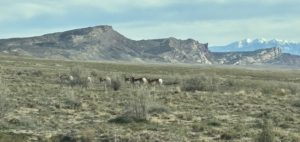
Antelope along the 4x4 road into Arches National Park

Antelope along the 4×4 road into Arches National Park

The “back door” entrance into Arches National Park is an unpaved, high-clearance road route primarily used for off-road recreation. A standard park map does not detail this route for navigation so download Google maps before you go. Yes, I said download the map ahead of time because you probably will not have cell service for an active Google Map. A high-clearance vehicle, preferably with four-wheel drive (4×4), is strongly recommended. This fun route includes soft sand, rock ledges, and steep sections that are impassable for most standard passenger cars. Really, don’t drive your car on this road. It is not a typical “gravel road.”

Tip: During the busy times of year, we’ve waited in line for up to 45 minutes just to enter the park from the main entrance. Entering through the back door (weather permitting) will give you more time to enjoy the park!

Check the Weather First

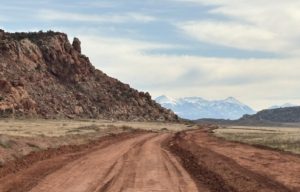
4x4 back road into Arches National Park

4×4 back road into Arches National Park

I recommend you check to see if it has rained or snowed in the days leading up to the day you want to try this route. Because of the deep sand and clay, the road can have some severe ruts and if it’s wet, I imagine it will be very muddy and slippery and you can easily get stuck. We could see the deep ruts when we drove it. They do pass through with a road grader but still, if it’s wet, that changes things. Water runs down from Klondike Bluffs. I wouldn’t go this way if it’s wet, way too much sticky mud.

Directions for the back door into Arches National Park

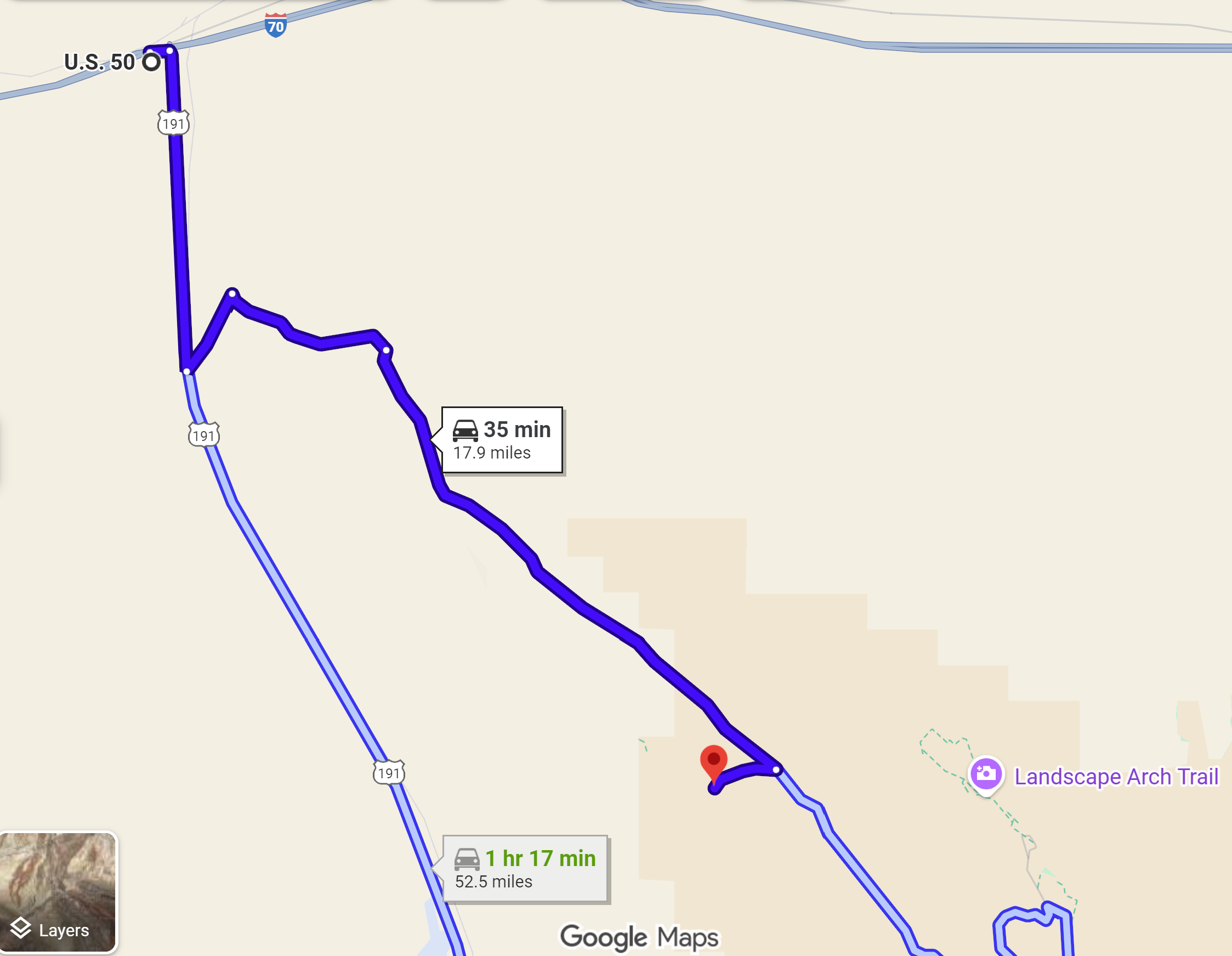
If you are coming from Moab, take Hwy 191 North, go right onto Willow Springs Road (BLM Road 378) approximately 13 miles north of Moab. The entrance to Utahraptor State Park is also along this road. Follow Google’s instructions to the Tower Arch Trailhead parking lot. This is NOT the way we took as we were coming from the north via I-70. We saw a lot more back-country on our route and I highly recommend it. At one point we came across twenty antelope resting next to the side of the road. Here’s the route we took.

Map to Tower Arch Trailhead - back door into Arches National Park Google Map

From Interstate 70, take the Moab exit onto Hwy 191 south, but only drive 4.5 miles. Turn left onto BLM 144 (Valley City Road). After a short distance, turn right onto BLM 145 (Salt Valley Road). This is where we saw the huge herd of Antelope basking in the sunshine.

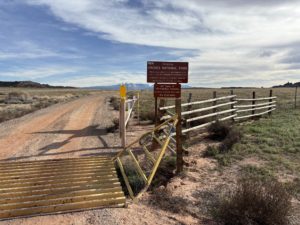
Back entrance gate into Arches National Park

Back Entrance Gate to Arches

Continue along BLM 145 admiring the Klondike Bluffs area. It’s beautiful. When you come to a “T” in the road, go right to stay on BLM 145. From here, drive about 9 miles. The name changes to Arches Salt Wash before you reach the entrance gate. The gate was open because we chose to enter Arches from the back door when the park was open. If the park is closed, this gate is probably closed.

Past the gate, you are almost there. Turn right at the sign for the Tower Arch trailhead. There’s a parking area with a nice pit toilet. Prepare for your hike and enjoy!

Leaving Tower Arch

When you leave, you can turn right onto Arches Salt Wash Road, and it will lead you to the main road in Arches National Park. Turn right onto Arches Scenic Dr. Then drive 16 miles through the park to the Arches Visitor Center and the park exit. Explore the many arches, scenic pull-offs, and hikes along the way!

Tip: Coming through the back door allows you to drive through Arches National Park, once. Coming from the main entrance you drive through the park, then you need to back-track at the end of your visit. Between saving time to get in and not having to back-track, you easily save 90 minutes of car time.

Tower Arch Trail

Paul at the rock scramble part of the Tower Arch hike

Paul at the rock scramble part of the Tower Arch hike

This hike was AMAZING! Challenging, beautiful, and very diverse. One of our favorite hikes so far. The All Trails app rates it as a “moderate” trail and I would agree. It is 2.5 miles out and back with an elevation gain of 626 feet because it’s a lot of up and down along the trail. It’s quite a large, secluded arch hidden behind the Klondike Bluffs that is ninety-two feet wide! And since it’s off the main park road, it doesn’t get nearly the same number of visitors. We only saw a handful of people when we hiked it in November with our daughter and son-in law.

Tip: To prepare for this hike, I would bring plenty of water. And I would pack it in a backpack, so your hands are free. You don’t need trekking poles but if you do bring them, make sure you can secure them to your body, so you have your hands-free. Wear layers, a hat, and remember your sunscreen no matter the time of year. Notice I said “hands-free” twice?

At the beginning of the trail there is a rock scramble that can look a bit daunting from the parking lot but go for it! We needed our hands to help balance us as we climbed the pile of boulders. It was tricky, and we were nervous, but we did it! The trail descends into a valley, a bit more up and down, then a final climb up a deep sand dune to the arch opening. It was impressive! The views along the way are spectacular. You can see so far at the top!

We climbed up under the arch itself and looked back through the Arch into Moab and beyond. We sat for a while to soak it all in and ate a snack.

Tip: Climbing into and under the arch itself allows for an incredible “framed” photo opportunity for a memorable picture you’ll want to share! Never climb on top of an arch.

Back door into Arches National Park to Tower Arch pictured hereThe first ¼ mile is the hardest. I was intimidated when I saw “rock scramble” in the reviews. Yes, we needed our hands, but we did it as novice hikers. We had Emma and Josh with us (daughter and son-in-law), and they were very encouraging and patient while we did our first scramble.
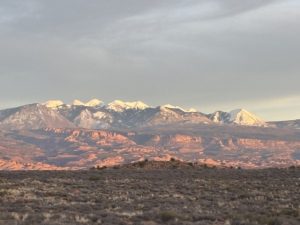
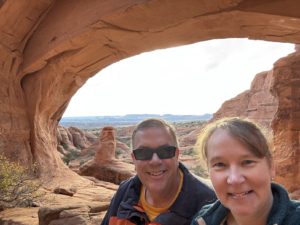
setting sun reflecting on the mountains in Arches National Park

The setting sun reflecting on the La Sal mountains in Arches National Park as we departed the park

After our hike, we went into Moab for dinner at Pasta Jay’s and drove back to Grand Junction. You can do this adventure as a day trip from Grand Junction, CO. However, I would stay in Moab and do more exploration of the entire area, like seeing dinosaur tracks! And if you don’t want to enter Arches from the back door, you can always get to Tower Arch from the main park road. For that stretch you can probably make it in a standard car, but the last few miles are dirt road.

Read our related post about the Many Adventures Near Moab Utah for more ideas!

If you are considering a move to Grand Junction, Paul would love to give you a relocation tour of the Grand Junction, Fruita and Palisade area when you come for a visit. Learn more About Paul and how he’s been serving his clients since 2001.

We have a lot of posts about other day trips from Grand Junction so check them out! There is so much to do in just a short drive from GJ. We feel like we are on vacation every weekend.

Michelle and Paul Aspelin sitting under Tower Arch in Arches National Park in Utah

Live Your Vacation in Grand Junction!
Follow us on Facebook and Instagram:
https://facebook.com/LiveYourVacationinGrandJunction

@liveyourvacationingj

Guest Post by Michelle Aspelin
growyourmindshare.com
Connect with Michelle on LinkedIn

© 2026 Paul Aspelin, REALTOR® MovetoGrandJunction.com and Michelle Aspelin. Copyright protected. All rights reserved.

Celebrating Feedspot.com Recognition and the Western Slope Lifestyle

30 Best Colorado Blogs by Feedspot.com badge for 2025 because #15 is movetograndjunction.comMoveToGrandJunction.com has been recognized as one of Feedspot’s 30 Best Colorado Blogs and Websites in 2025 and one to follow in 2026! We are the only real estate and relocation blog from Grand Junction or the Western Slope to earn a spot as one of the top 30 Colorado Blogs, highlighting our trusted Grand Junction relocation insights and resources.
Feedspot.com reviews thousands of blogs each year, evaluating content quality, consistency, authority, and reader engagement. To be recognized alongside major statewide publications is an incredible confirmation that the hyper-local guidance we provide for people moving to Grand Junction truly matters.

This recognition is about more than just awards — it’s about celebrating the Western Slope lifestyle and helping people discover everything this region has to offer. From its outdoor adventures to unique neighborhoods and vibrant communities, we’re proud to showcase the best of life on the Western Slope.

Learn more about me.

Why This Recognition Matters

Recognition is exciting, but the real value comes from what this means for the people using MoveToGrandJunction.com as a trusted Grand Junction relocation blog and Western Slope relocation resource.

  1. Trustworthy, Reliable Information
    Feedspot’s editorial team selected the Top 30 Colorado blogs based on content quality, accuracy, and value. Readers can rely on MoveToGrandJunction.com as one of the most trusted and original real estate resources for relocating to Grand Junction and the Western Slope.
  2. A Fresh, Local Perspective — Not Generic “Copy-Paste” Content
    Most relocation blogs are written by writers who have never set foot in Mesa County. Every article on my MoveToGrandJunction.com blog is based on 25+ years of real estate experience, an understanding of the Western Slope lifestyle, a “never stop exploring” attitude, and countless conversations with people considering a move to Grand Junction. This ensures hyper-local guidance and practical tips you won’t find on generic relocation sites.

“Paul went above and beyond expectations- all done with a respectful and caring attitude! Thank you so much!” – Chuck Weber

What Makes MoveToGrandJunction.com Stand Out

These are the qualities the Feedspot.com team looks for — and why the blog stands apart:

  • Hyper-local Accuracy: Every guide is based on actual experience living, exploring, and working in the Grand Junction area.
  • Real Relocation Guidance: From “Top Day Trips from Grand Junction” recommendations to local real estate insights, it’s built for real people making big decisions and real moves.
  • Human-Friendly Writing: Crafted to be approachable, useful, and actionable for anyone relocating to the Western Slope.
  • Market Insights You Won’t Find on Generic Real Estate Sites: The blog is backed by 25 years of real estate expertise and a love for taking care of people wanting to move to the Grand Valley.

Articles you might enjoy:

A Big Thank You to Our Readers & Relocators

The recognition of being one of the top 30 Colorado blogs is exciting, but the real reward is knowing the content is helping visitors to this blog make informed decisions about moving to Grand Junction. Whether you’re researching neighborhoods, planning a visit, or moving across the country, I created this blog to help you feel confident about your choice — and to celebrate the Western Slope lifestyle along the way.

Your visits, questions, and feedback make this possible, and we couldn’t do it without you. Many of our Live Your Vacation blog posts are inspired by my conversations with people like you!

Please let us know what you’re thinking.

What’s Coming Next for MoveToGrandJunction.com

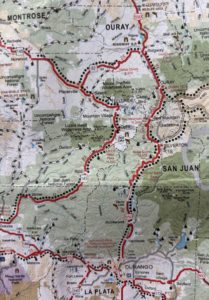
Map of Ouray, Silverton, Telluride area and Million Dollar HighwayFeedspot’s recognition motivates us to keep raising the bar. Here’s what’s in the pipeline:
Stay tuned — there’s a lot more coming for anyone considering a move to this incredible region. Please reach out with questions and comments as our conversations spark new blog posts.

Planning a Move to Grand Junction?

If you’re relocating to Grand Junction, explore all the guides, tools, and resources on our Living Your Vacation blog page or reach out directly for personalized help.

Start Your Move to Grand Junction Discussion Here → 

Start your home search with a local MLS source

Live Your Vacation in Grand Junction!

Michelle and Paul Aspelin at Peach Street Distillery in Palisade, CO
PAUL ASPELIN, REALTOR®
GRI, SRES®, CNE
Serving Grand Junction, Palisade, Fruita and all of Mesa County
Grand Junction Real Estate Expert
Text/Call 612-306-9558

Connect with me on LinkedIn

Paul Aspelin Reviews and Recommendations

© 2025 Paul Aspelin, REALTOR®. MovetoGrandJunction.com Copyright protected. All rights reserved.

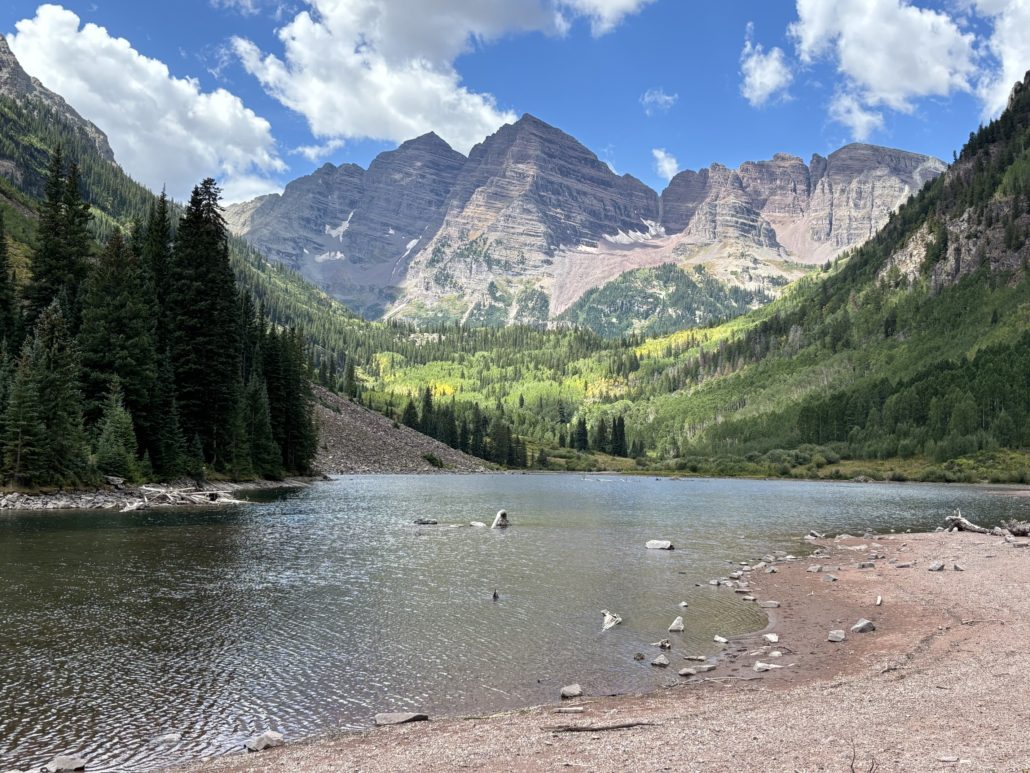
Photo below is from our day trip to the Maroon Bells area near Aspen/Snowmass. A wonderful trip with one of our daughters.

Top 30 Colorado Blogs award for movetograndjunction.com here's a photo of Maroon Bells near Aspen CO

Grand Junction, Colorado Real Estate & Homes for Sale

Search Grand Junction & Mesa County Homes

Grand Junction Area Realtor Association logoLooking to start your Grand Junction home search? Whether you’re relocating to Mesa County or exploring neighborhoods locally, my free MLS search gives you accurate, up-to-date listings — not delayed national portal data.
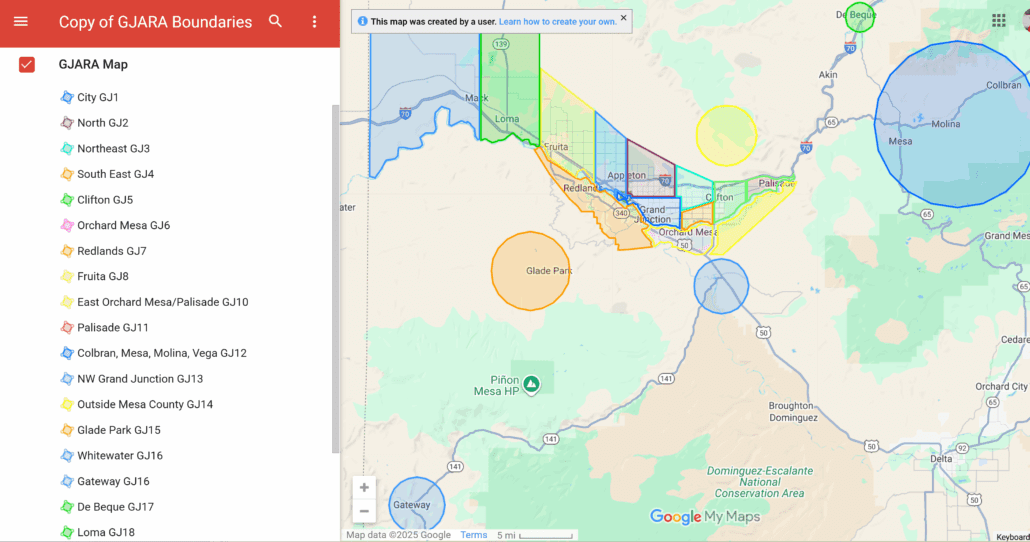
I am a proud member of the Grand Junction Area Realtor Association (GJARA) and a trusted GJARA Relocation REALTOR® with 25+ years of experience helping buyers relocate and purchase homes in the Grand Valley. I offer expert guidance at every step. From understanding neighborhoods to finding the right property for your lifestyle, I make your move easier and more confident.

Whether you’re casually browsing or preparing for a move, my local MLS search lets you explore Grand Junction and Mesa County homes at your own pace, without unnecessary pressure.

👉[Start Free MLS Search →]

Download the Free MLS Area Map Guide

Before you dive into the listing, be sure to review the Grand Junction MLS area search map guide PDF (pictured above) to explore neighborhoods and make your Grand Junction home search more effective.

The Grand Junction MLS area search map guide defines where “north” Grand Junction is, boundaries for the “Redlands”, and zip codes you can use when setting up your MLS search criteria.

Before you begin your Grand Junction home search why not discover more about Why people are Moving to Grand Junction

Explore Every Listing in Grand Junction & Mesa County

My local MLS-powered search gives you direct access to real-time listings across Grand Junction and Mesa County. Filter, save favorites, get automatic updates, and collaborate with a trusted local agent — all in one experience.

Benefits of Using My MLS Search:

  • Explore active homes in real time
  • Save favorites and receive automatic updates
  • Collaborating with a local GJARA Relocation REALTOR®

Guidance Behind Every MLS Listing

Every home has a story — and I can help you uncover it. Is a property sitting on the market due to pricing, condition, or past offers that fell through? Were there renovations, repairs, or unique quirks not shown in the MLS? I dig into the details so you can make smarter, more confident decisions when searching for a home in Grand Junction.

Pro Tip #1: If a home has been listed for weeks or months, it doesn’t always mean its undesirable. I can uncover the real reasons so you can spot hidden opportunities.

Why Work with a Local GJARA Relocation REALTOR®

As an active GJARA member, I can provide:

  • Verified MLS data updated in real time
  • Local market trends and property value guidance
  • Personalized relocation guidance for out-of-state buyers

Pro Tip #2: Local GJARA data is more accurate than national real estate portals, which often show pending or sold homes as “active.”


Grand Junction Area Association of Realtors Boundary Map

Grand Junction Area Association of Realtors Boundary Map

Privacy & Security of Your Search

Your search data stays 100% private. Unlike many national portals, your info is never sold, shared, or fed to advertising networks. My MLS search keeps your experience focused on accuracy — not ads for the agent who paid the most to get in front of you.

Pro Tip #3: Many buyers find listings on national sites that are already pending or sold. My MLS search gives you the real status instantly.

Tips for Exploring Homes in Grand Junction & Mesa County

  1. Evaluate photos carefully; ask for insights.
  2. Read between the MLS lines for key details.
  3. Spot red flags early (price drops, re-lists, deferred maintenance).
  4. Get access to off-market or pre-market listings.
  5. Check listing details before considering a showing; virtual showings available.
  6. Sign up for automatic updates and save favorites.

Grand Junction Relocation Made Easy

Relocating to Grand Junction? My local MLS search helps you explore homes from anywhere, while my expertise helps you choose neighborhoods, schools, and amenities that fit your lifestyle.

Here are some articles I wrote that you might be interested in:

Pro Tip #4: Research neighborhoods, commute times, and schools before considering a showing.

Pro Tip #5: Use the City of Grand Junction GIS map for property info: https://www.gjcity.org/maps

Local Expertise You Can Count On

With 25+ years of real estate experience as a top Grand Junction Relocation REALTOR® and former Broker/Owner of my own brokerage, I’ve guided hundreds of buyers and sellers through smooth, successful transactions. My extensive expertise ensures you’ll get proper guidance to make confident, informed decisions at every step of your home buying or selling journey.

Expect honest guidance, local insight, and a no-pressure experience.

Ask me about my customized Grand Junction Housing Market Update reports I can email to you with your own search criteria.

What My Clients Are Saying

“Paul does an excellent job relating to the customer. He pays attention to details and is very organized. He has an easy-going demeanor and is very professional. It was a wonderful experience working with him!”  ⭐⭐⭐⭐⭐- Lance, Candace and Elle Kaiser

“I had a great time with Paul as my Realtor® and I would definitely recommend Paul to anyone who needs a Realtor®!” ⭐⭐⭐⭐⭐– Robert Robinson

Start Your Grand Junction & Mesa County Home Search Today

Use my free local MLS search to browse all homes for sale and collaborate with a trusted GJARA Relocation REALTOR®. Whether it’s a starter home, family residence, or luxury property, you’ll get accurate listings and expert guidance.

[Start Free MLS Search →]

Pro Tip #6: Save your favorites and get instant alerts for new homes matching your criteria.

FAQs about Homes for Sale Searching

Q: How do I search the Grand Junction and Mesa County MLS?
A: Use my free local MLS search above. Filter by price, features, and neighborhood.

Q: Do I need to register to browse homes?
A:
No. Register only if you want to save favorites or get updates.

Q: Why work with a GJARA Relocation REALTOR®?
A: Verified MLS data, local insight, and professional guidance make your relocation smoother.

Q: Can I see off-market or pre-market homes in Grand Junction and Mesa County?
A: Yes! When you work with me under an exclusive representation agreement, you might gain access to properties that often never appear on public MLS sites. As a local GJARA Relocation REALTOR® with a strong network, I frequently come across early off-market and pre-market listings, helping you uncover hidden opportunities before other buyers see them.

Helpful Travel & Visitor Resources

[Start Free MLS Search →]

Reach out with confidence! I’m here to help! Contact me to set up a Free consultation to discuss your potential move.

Live Your Vacation in Grand Junction!

Paul Aspelin REALTORText or Call (612) 306-9558 (locally based)

Paul Aspelin, REALTOR®
GRI, SRES®, CNE
Learn more about Paul Aspelin

Paul Aspelin Reviews and Recommendations

Serving Grand Junction, Fruita, Palisade and all of Mesa County Communities.
👉I was recently featured in The Grand Junction Sentinel for my work helping people relocate to Western Colorado.

Licensed in Colorado.

© 2025 Paul Aspelin, REALTOR® MovetoGrandJunction.com.
Copyright protected. All Rights Reserved.