Grand Junction Area Spotlight
When you move to the Grand Junction area, there are plenty of great spots in and around the area worth checking out. In this post I put the spotlight on a few of our favorite places or experiences, in no particular order. The main image on this post was taken on the Waterfowl Trail in the Connected Lakes State Park near downtown Grand Junction. I have a video about it on my Live Your Vacation Facebook Page.
Send me an email if you have any suggestions of places you think we should check out or you are curious about.
Parade of Lights (December)
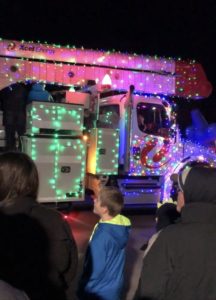
Parade of Lights in Fruita
Our first Parade of Lights was officially in Fruita when we were staying there for 3 weeks during our Living in Grand Junction Experiment. It’s way too cold in Minnesota to attend a parade like this so it’s something we look forward to each December. Before the Grand Junction Parade of Lights starts, we head over to Main Street Bagels to get some authentic hot chocolate. Typically, we are joined by our daughter and son-in-law to enjoy the floats. It’s not too cold but you do want to wear a hat and gloves. Hot cocoa helps too!
Fruita Visitor Center
There is a Visitor Center in Grand Junction off Horizon Drive near the airport, but it’s just not as good as the Fruita Visitor Center. The GJ location went through a transition recently so they didn’t have as many brochures during that time. But the Fruita Visitor Center is always well stocked with information and volunteers to share their experiences. On one visit, we met a gentleman who lived just a couple of miles from where we grew up in Deephaven, MN. I sometimes stop in there to pick up guides, maps, and brochures for my visiting clients. I encourage you to go there yourself. We discover something new every time. They have information about all of Colorado, not just the Grand Junction area.
Colorado River Bridge
We often find ourselves drawn to the bridge over the Colorado River at Las Colonias Park near Camp Eddy. In the spring, we come to watch the powerful rush of snowmelt flowing through the river. By summer and fall, it’s the perfect spot to check water levels, relax, and watch people float by, soaking in the Grand Valley lifestyle. Sometimes we walk around the nearby Butterfly Pond. Michelle’s sister and brother-in-law stayed at Camp Eddy for 3 weeks in October. They loved being so close to the river and the Colorado Riverfront Trail. Read my post about the cons of living in the Grand Junction area where I mention the goat heads on the Riverfront Trail and how to avoid a flat tire on our bike.
Downtown Grand Junction
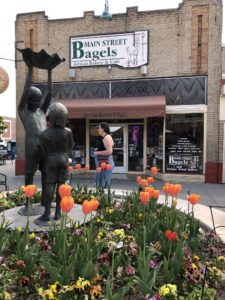
Main Street Bagels is a favorite
There is just something about walking downtown Grand Junction from end to end. We have many favorite shops and restaurants downtown and would be happy to meet you in any location downtown! Sometimes when we are running errands, we’ll just drive through downtown to see what’s going on. Attending the Sunday Farmers Market in Palisade the best, but we also go to the Thursday evening Farmers Market in Grand Junction several times a year.
Parking is easy, drive to Colorado Avenue, just a block off main street. You can usually find a spot to park in the lot behind the Rockslide Brewery. The lot is free after 4pm and on weekends. Keep a couple of quarters in your vehicle in case you need to pay for parking. It’s very reasonable. My Realty One Group Western Slope Real Estate Office is located in downtown Grand Junction, and I frequently pay to park in the area. Let me know if you have question about the parking apps.
Mesa County Libraries
We are constantly researching the area and we read business and marketing books as a hobby. We’ve been to the Fruita, Grand Junction, Clifton, Orchard Mesa, and Palisade Libraries. Libraries are a great resource for the community. Read my post about Mesa County Libraries and the Friends of the Mesa County Libraries. I even started a Little Free Library in Las Colonias, visiting it often to make sure it’s still filled with books, and Michelle usually finds one for herself.
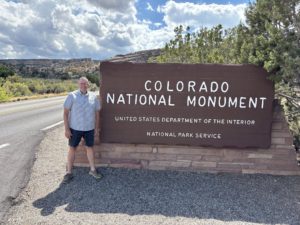
Colorado National Monument Favorite Stops
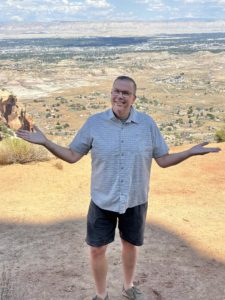
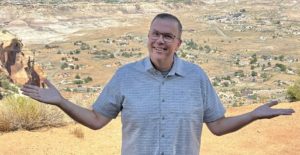
Paul Aspelin standing near the top of the Serpent’s Trail in the Monument
Take the Fruita (west) entrance into the Colorado National Monument. Just before the Visitor Center, turn left at the Saddlehorn Campground. At the “Y” in the road, veer left and follow the loop around to the parking spaces in front of the Book Cliffs View. Walk out about 50 feet for some incredible views. There are a few short trails nearby, one leads to the Visitor Center. It’s one of our favorite spots to bring guests and it’s typically not crowded.
Another favorite is Otto’s Trail. It gives visitors a chance to stretch their legs and get emersed in the canyons of the Monument. A stop at the top of Serpent’s Trail is another great spot but there are only 4 parking spaces so it’s not always available when you drive by. If you can stop, walk for about 50 yards down the trail and enjoy the view! Serpents Trail is the original road to get to the top of the Monument. It’s a great hike, but a lot of elevation gain. Watch for big horn sheep, mostly along the western side of Rimrock Drive through the Monument.
Palisade Sweet Spots
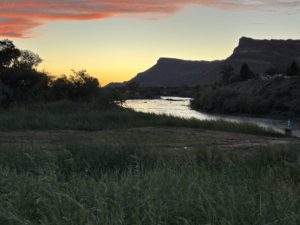
Clark’s Distillery at Sunset looking at Mt. Garfield
Outside of Grand Junction, we visit Palisade the most. We always enjoy the Sunday Farmers Market, and we have some favorite restaurants if you are looking for recommendations. One of our favorite spots is to sit outside in the Adirondack chairs at Clark’s Distillery and watch the sun set over the Colorado River. The setting sun makes the Book Cliffs glow. They have great food and a variety of beverages. Another spot to sit and soak up the view is at the Colterris Winery. The winery is at the far eastern edge of Palisade on N. River Road. You are at the base of the Book Cliffs and the Grand Mesa, peering into the De Beque Canyon. Most days there is a gentle breeze due to the micro-climate of this area. It’s very peaceful.
I’ve got a few more favorite spots in the Grand Junction area, and I’ll usually mention them when I give clients a tour. If they are interested, I add them to the itinerary. Some are quick stops, overlooks, high points, special views, and unique features to point out. As a CMU alumni parent, we always enjoy pulling into the parking lot at the Outdoor Program building and watching the students walk about campus. You can get breakfast at the CMU Library building nearby. I have a post with some tips for CMU parents if your child is considering attending this fabulous Western Slope University.
Do you have a favorite spot in Grand Junction, Fruita, or Palisade? Send me an email and we will check it out!
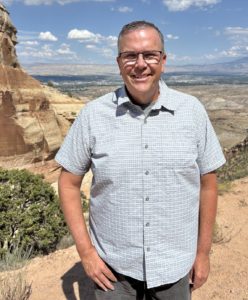 Move to Grand Junction and Live Your Vacation Every Day!
Follow us on Facebook
Text or Call (612) 306-9558 with your questions about living in Grand Junction.
PAUL ASPELIN, REALTOR®
GRI, SRES®, CNE
Learn more about me and how I serve my clients.
Serving Grand Junction, Fruita, Palisade and all of Mesa County.
Licensed in Colorado.
© 2025 Paul Aspelin, REALTOR® MovetoGrandJunction.com. Copyright protected. All Rights Reserved.

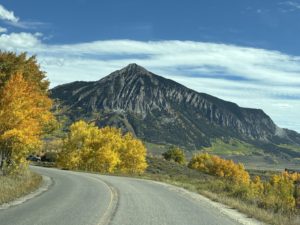
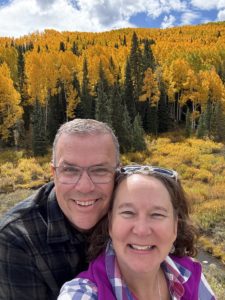
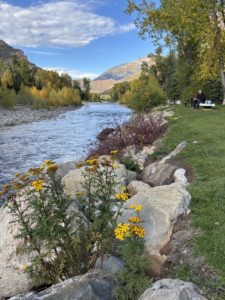
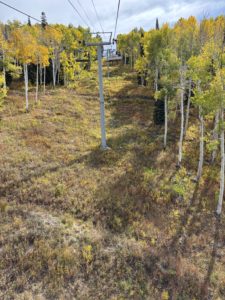

 I will pick you up at your hotel and coordinate certain stops to your interests. We will tour Grand Junction, Fruita and Palisade showing all each city has to offer. From the storybook downtown of
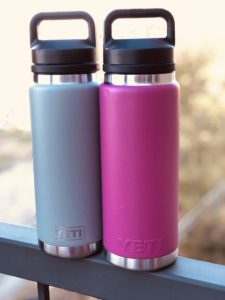
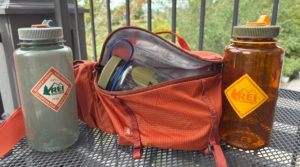 We originally bought a 32-ounce Nalgene bottle to carry extra water. Nalgene bottles are made of hard plastic, and they are not insulated. Michelle got a small waist pack to be able to carry this size bottle, and it fits in there perfectly. Her YETI® water bottle is too big. Sometimes you don’t want something in your hand when you are hiking so you can use your hands to stabilize yourself when you are climbing. Her pack is called the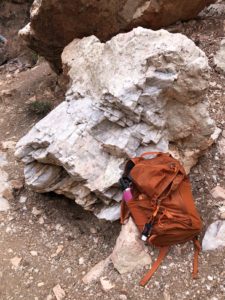


 Text/Call (612) 306-9558
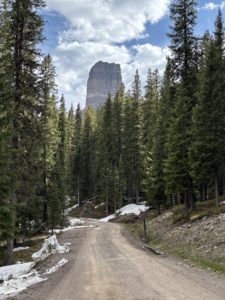
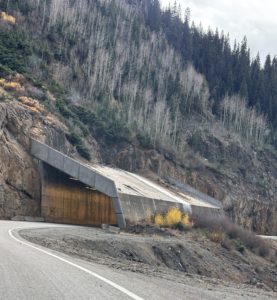
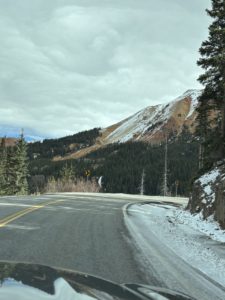
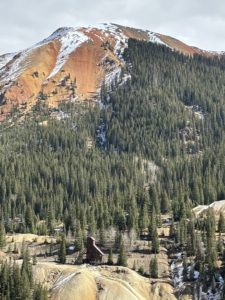
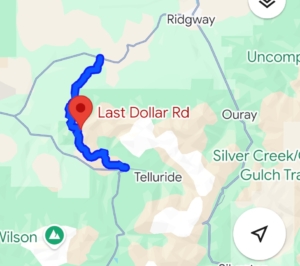 What an amazing day trip to Telluride! What started out as just a Last Dollar Road Day Trip also included discovering where Last Dollar Ranch was, the house in the John Wayne movie True Grit, Ralph Lauren’s Double RL Ranch, Last Dollar Pass, Tom Cruise’s old neighborhood, the Telluride one runway regional airport and drinks on the roof of the Last Dollar Saloon. Oh yes, and an indescribable experience of a Mushroom Parade down the main street in Telluride! So unexpected, it left us speechless.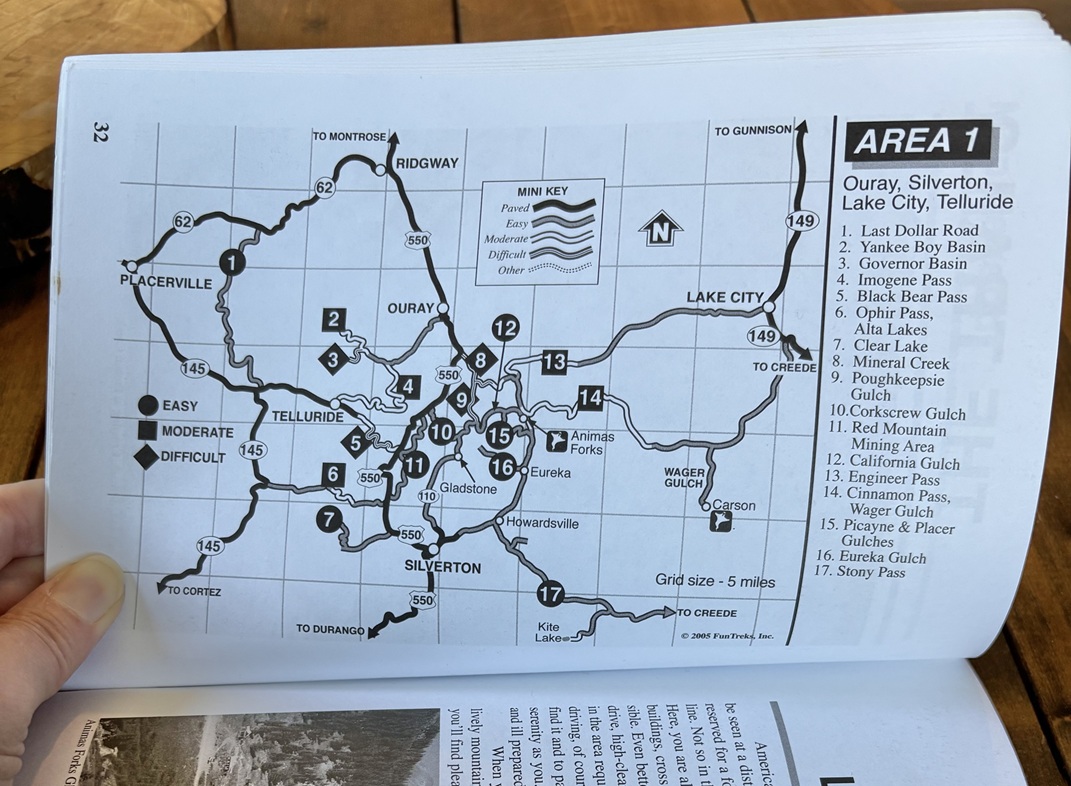
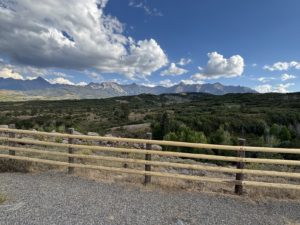
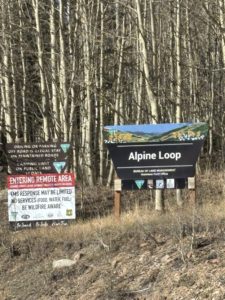
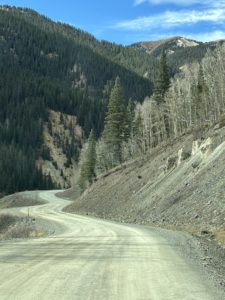
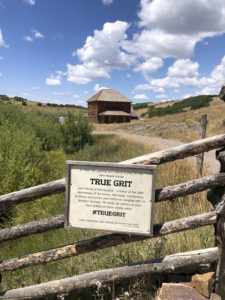 After the scenic overlook near Ridgway, we took a left onto CR-58P. There’s a sign for Last Dollar Road. The road is closed from January to May due to snow. This is where our Last Dollar Road day trip officially begins. The unpaved county road was wide and well maintained. Our first photo op was at Mattie Ross’ Ranch from the True Grit movie with John Wayne. True Grit was filmed in 1969 and begins and ends at the family ranch of young Mattie Ross (Kim Darby), which was filmed at a historic home on Last Dollar Road above Ridgway. In the final scene, John Wayne jumps his horse over a fence and rides off into the distance. The ranch house has been restored and remains private property. The scenery around it hasn’t changed much and is as gorgeous as it was then.
 Driving the Last Dollar Road: Narrow, Steep, and Stunning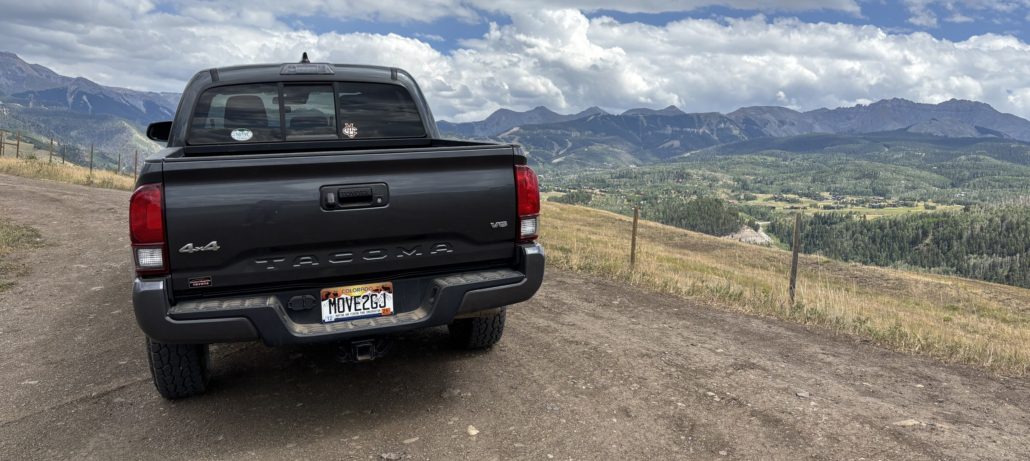
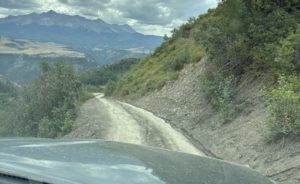 A Thrilling Descent into Telluride
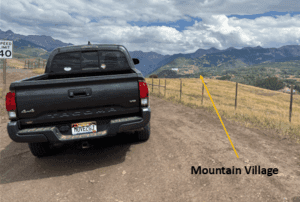 We continued our descent and popped out right at the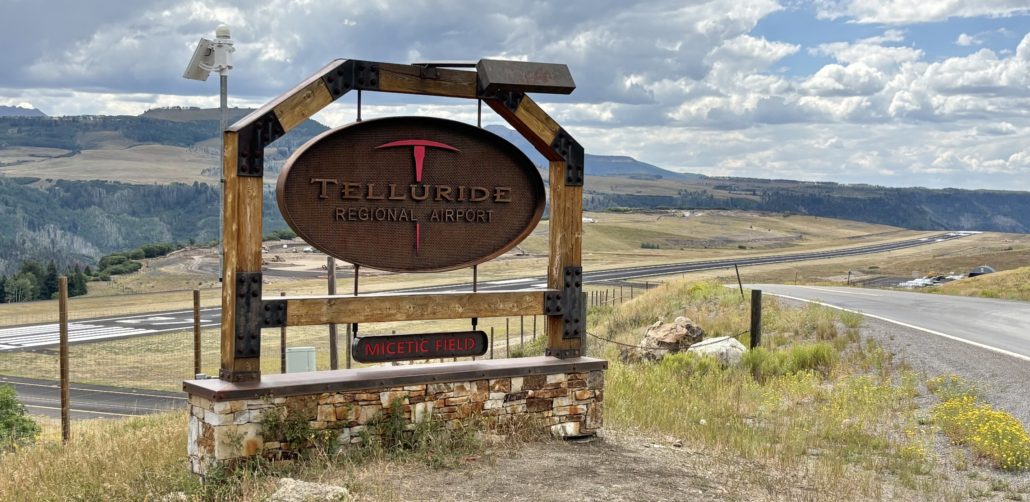
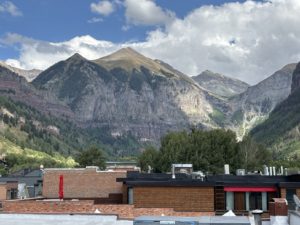
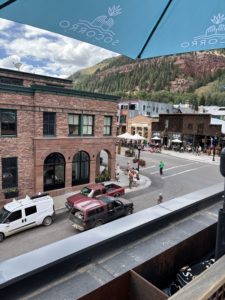 The Mushroom Festival was unexpected and eye-opening. People were dressed up as mushrooms, wearing mushroom hats and other unique costumes. It’s a weekend festival described on their website as “A weekend of mushroom love, community connection and fungi everything. You can expect expert hosted forays to ID mushrooms in the great San Juan Wilderness, talks from world-renowned mycologists, a foundation of the fest rooted off psychedelics and its current resurgence, large community gatherings, culinary delights, dozens of mushroom vendors and of course the world renown Telluride Mushroom Festival parade. Every year the festival attracts 1000’s of fungi fans from across the world.”
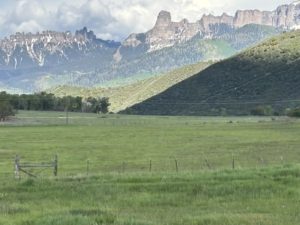
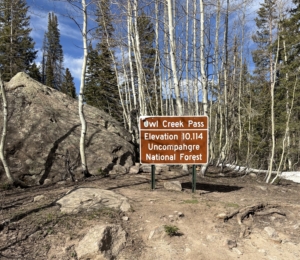
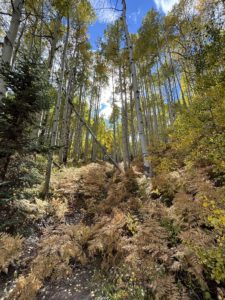
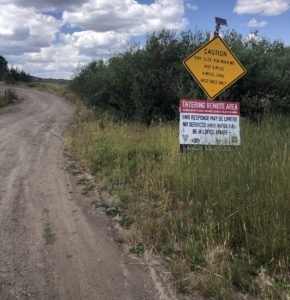
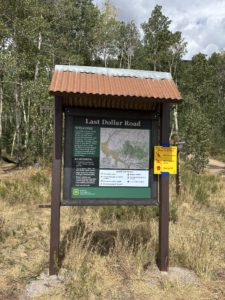 We sure loved our Last Dollar Road day trip. I think we will be talking about everything we experienced for years to come. We loved the gorgeous aspen forest with unobstructed views of Sneffels Mountain Range and Wilson Peak. The range of colors from brown, green, and red against the bright blue sky was so beautiful. I forgot to mention that we noticed some forest service road camp sites on the Telluride side of the pass. There were no bathrooms, water or other services along the trail. It’s as rustic as it gets. We loved seeing the large ranches on the Ridgway side and the views from the Last Dollar Pass at an elevation of 10,663 feet. If we had family or friends in town, we might drive to Telluride on the highway and just go up to the Last Dollar Pass from Telluride and back down again. That would take less time and still offer spectacular views. Until next time!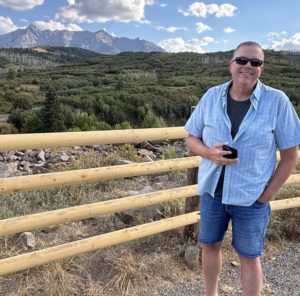
 TABOR stands for Taxpayer’s Bill of Rights. The Colorado Department of Revenue website shows which type of refunds have been issued to Colorado residents since 2018. Refunds can be for property taxes, income taxes, or sales taxes. Learn more about potential surplus refunds at
  Live Your Vacation in Grand Junction!
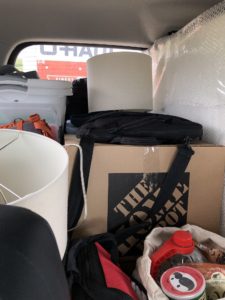 Moving Preparation Guide for People Relocating to Grand Junction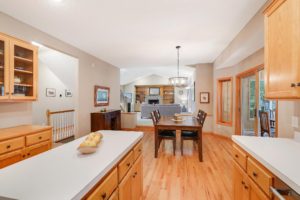
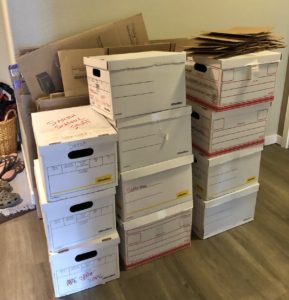 This whole process is emotional. We started with the easy decisions first. Things we didn’t use anymore or were outdated. Things we knew for sure we didn’t want or need anymore. After all, we were moving from a 2600 SF home with a full basement and three-car garage to a home of half the size. Knowing we would be downsizing, we actually looked forward to getting rid of stuff. It was very gratifying to see an empty surface or sparsely filled cabinet.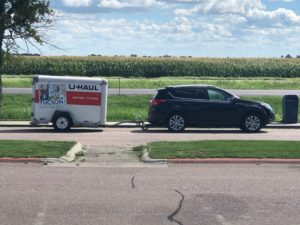
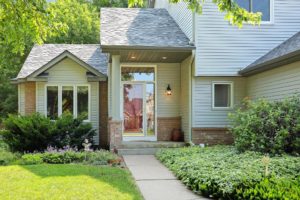 Paul always tells his clients that “The way you sell a home is different than the way you live in a home.” That means decluttering and depersonalizing it as much as possible before it goes on the market. Pre-packing items that are used on rare occasions or in a different season than the one you are currently in can really help open up your cabinets and closets. You want buyers to be able to easily walk up to a window and move from room to room. Too much furniture makes a room look small. Most times less is best.