What Grand Junction Relocation Buyers Find Shocking About Buying a Home in Mesa County
(And Honestly… I Did Too)
Grand Junction relocation buyers moving to Colorado’s Western Slope tell me the same thing almost every time:
“This feels different than what we’re used to.”
They’re right.
After decades of working in a highly regulated metro real estate market before relocating to Western Colorado myself, I’ve experienced both ends of the spectrum. Rigid systems with standardized rules… and more flexible markets like Mesa County, where buyers are expected to ask better questions.
The buying process here isn’t broken.
It’s simply different.
And for Grand Junction relocation buyers coming from states where disclosures are detailed, permits are expected, inspections are standardized, and procedures are predictable, those differences can feel surprising—or even unsettling—if no one explains them before an offer is written.
That’s where experience in multiple markets becomes a real advantage.
Below are the eight most common things relocation buyers tell me shocked them once they started buying on the Western Slope. None are deal-breakers—but every one of them matters.
What surprises Grand Junction relocation buyers most?
Relocation buyers are often surprised by non-mandatory seller disclosures, “as-is” contracts, limited permit requirements, unregulated septic systems, inspection practices that vary widely, misleading days-on-market data, and resale homes that appear poorly prepared for the market.
👉 Learn about my Grand Junction Relocation Guide
Why Seller Disclosures Surprise Grand Junction Relocation Buyers
One of the first things that catches relocation buyers off guard is how seller property disclosures work in Colorado.
In many states, disclosures are mandatory and provided upfront.
In Colorado, sellers are not required to complete a Seller’s Property Disclosure unless a buyer specifically requests one and negotiates it into their offer.
While sellers must disclose adverse material facts actually known, the disclosure form itself is not question-based like it is in more regulated states.
Instead of detailed prompts such as:
- “Have you ever had water intrusion?”
- “Has this system failed or required repair?”
- “Are you aware of X, Y, or Z?”
Colorado real estate disclosures function more like a checklist—leaving sellers to decide whether checking a box is enough, or whether explanation is needed.
What feels most backward to many buyers is when disclosures are delivered. In many cases, buyers submit an offer first and only receive disclosures afterwards, sometimes learning about long-standing issues they would have wanted to know upfront.
The best agents in the Grand Valley understand this concern and encourage sellers to complete disclosures before listing and upload them to the MLS. That transparency prevents deals from unraveling later.
I’ve also seen disclosures returned completely blank, but signed.
Yes, that technically satisfies the requirement.
Practically? It creates immediate doubt.
👉 Learn more about buying a home in Grand Junction
Why Every Home Sale Is “As-Is” in Colorado
One of the biggest surprises for relocation buyers is learning that every home sale in Colorado is considered “as-is.”
This isn’t an optional clause, it’s boilerplate language in every state-approved contract:
“Seller is conveying the Property in an ‘As Is,’ ‘Where Is,’ and ‘With All Faults’ condition.”
Buyers can and absolutely should inspect the home.
But sellers are not obligated to make repairs simply because issues are discovered.
Negotiations can happen—but they are exactly that: negotiations, not guarantees.
For buyers coming from states where repairs are routinely expected, this feels jarring. “As-is” does not protect sellers who fail to disclose known material defects, but it does place more responsibility on buyers to inspect thoroughly and negotiate strategically.
My takeaway after decades in both systems?
Buyer beware—but buyer prepared wins.
Building Permits Aren’t Always Required Outside City Limits
Relocation buyers are often shocked to learn that homes built outside city limits may not have required building permits at all.
That doesn’t automatically mean poor construction—but it does mean buyers need to dig deeper:
- Who built the home
- When it was built
- Whether inspections were ever performed
For buyers accustomed to uniform oversight, this lack of regulation can feel unsettling unless it’s explained upfront.
If you’d never consider buying a home without permit oversight, wouldn’t you want to know before touring properties outside city limits?
Exactly.
Septic Systems in Mesa County Are Largely Unregulated
This one surprises almost everyone—myself included.
In the Grand Valley, septic systems are not centrally regulated, tracked, or logged. There’s no statewide database, inspection history, or maintenance record system.
For relocation buyers coming from states with strict septic oversight, this can feel risky. It also makes proper inspections and trusted contractors absolutely critical.
Having spent decades working in a highly regulated septic environment, I help buyers separate:
- Legitimate red flags
- From “that’s just how it’s done here” explanations
The Real Cost of New Construction Lots
New Construction Buyer Representation
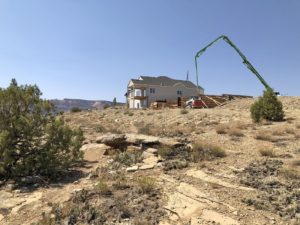
Relocation buyers shopping for new construction homes are often surprised to learn that the advertised lot price is not always the real cost to build.
Certain areas of Mesa County have swelling or shifting soil that may require:
- Foundation piers or pilings
- Additional engineering
- Specialized foundations
Those requirements can easily add tens of thousands of dollars before framing begins.
Many builders require buyers to pay for soil testing after a lot is under contract. While contingencies help, they still cost time, money, and emotional energy.
Pro tip: Knowing which areas are prone to issues before shopping saves weeks of frustration and thousands of dollars.
Helpful guide to understanding swelling soils in Colorado: https://coloradogeologicalsurvey.org/publications/swelling-soils-guide-colorado-homebuyers-homeowners/
Let me know if you’d like to borrow my copy.
👉 Read my post about cost of living in Grand Junction insights
Why Existing Homes Often Feel “Not Market Ready” to Out-of-State Buyers
Relocation buyers notice this immediately.
In many metro markets, professional resale staging is standard.
In the Grand Valley, it’s often misunderstood—or skipped entirely.
Rearranging furniture is not staging.
Homes that feel cluttered, unfinished, or unprepared turn buyers off quickly and often sit longer than they should. Selling a home and living in a home are two very different things.
I staged my first listing in 2004 and have worked alongside professional resale stagers ever since. That experience helps my buyers see opportunity where others only see someone else’s stuff.
👉 Are you selling before relocating? Read about my referral services.
Days on Market Doesn’t Mean What Most Buyers Think
Almost every relocation buyer looks at Days on Market (DOM). What surprises them is how it’s calculated in the Grand Valley.
DOM includes:
- Time to receive an offer
- Plus, time to close
A sold home showing 50 days on market may have gone under contract in 10–15 days and simply taken longer to close.
Without context, buyers may assume a home was initially rejected by the market. In reality, the story is often very different—and sometimes creates opportunity. Allow me to explain the real days on market for any property, active or sold. Zillow® doesn’t help.
Why Some Buyers Are Discouraged from Attending Inspections
 This one tops the list for me.
Some buyers are discouraged—or even charged extra—to attend their own inspection.
That didn’t work for me, which is why I only recommend and work with inspectors that allow my relocation buyers and I to tag along for every inspection.
I’ve spent thousands of hours attending inspections with buyers over the past 25 years. That firsthand exposure has made me a better agent and my clients more knowledgeable homeowners.
Today, I walk through homes pointing out likely inspection issues before offers are written, allowing buyers to negotiate based on insight—not hope.
For relocation buyers who can’t attend inspections in person, I attend on their behalf.
👉 For additional insider insight read my post about some cons of living in Grand Junction.
Why the Agent You Work with Matters When You’re Relocating
Relocation buyers don’t need hype.
They need clarity—before decisions are made.
Experience in multiple markets allows an agent to anticipate confusion, ask better questions, and protect buyers from surprises they didn’t know to look for.
When Grand Junction relocation buyers understand why the process feels different, they can navigate it with confidence instead of frustration.
👉 Learn more about me and how I serve my clients.
Final Thought for Grand Junction Relocation Buyers
None of these differences are reasons not to buy in Mesa County.
But being caught off guard by them is a reason deals fall apart.
My goal is simple:
I want my relocation buyers to be confident, informed, and prepared—before they ever fall in love with a home.
Reach out to discuss your relocation with confidence, send me an email.
Common Grand Junction Relocation Buyer FAQ’s
- Why do Grand Junction relocation buyers feel unprepared when buying a home?
Because buying practices in Grand Junction differ from large metro markets, including inspections, property infrastructure, land use, and local disclosures. My relocation buyers are often surprised when familiar assumptions no longer apply. - What is the most common mistake Grand Junction relocation buyers make?
Assuming the buying process works the same as their previous market. This can lead to overlooked inspections, misunderstood land characteristics, and unexpected costs after closing. - Should Grand Junction relocation buyers use a local lender because of these nuances?
Our local lenders understand Mesa County’s unique processes, rural lot financing, appraisal differences, and Colorado-specific requirements. They guide my relocation buyers through these nuances, ensuring a smoother, faster, and less stressful home purchase. - How can Grand Junction relocation buyers avoid costly surprises?
By working with a relocation-experienced local professional who understands both metro and Western Colorado real estate systems and can identify risks early in the process.
If you would like to speak with a local Grand Junction Mortgage Lender, I highly recommend you start that process here.
Check out my Google Business profile to discover the services I offer to all relocation clients.
 Live your vacation in Grand Junction!
 Live your vacation in Grand Junction!
Paul Aspelin Reviews and Recommendations
https://movetograndjunction.com/paul-aspelin-reviews-and-recommendations
PAUL ASPELIN, Relocation & Listing Expert
REALTOR®, GRI, SRES®, CNE
Serving Grand Junction, Palisade, Fruita and all of Mesa County
Text/Call 612-306-9558
© 2026 Paul Aspelin, REALTOR®. MovetoGrandJunction.com Copyright protected. All rights reserved.
 MoveToGrandJunction.com has been recognized as one of Feedspot’s
  Feedspot’s recognition motivates us to keep raising the bar. Here’s what’s in the pipeline: